
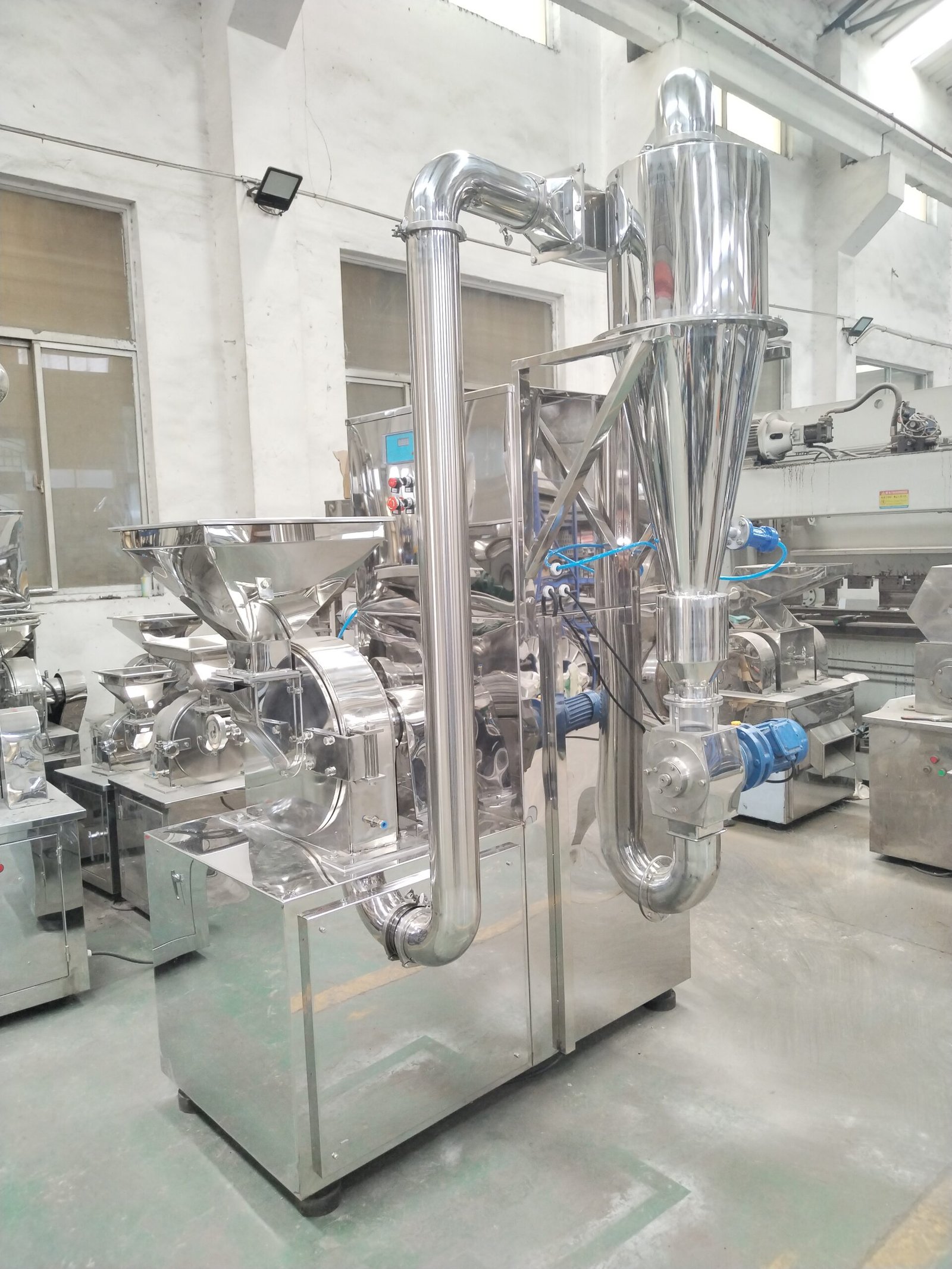
Why Industrial Flour Mill Dust Collection Matters
Flour milling is not only about turning grain into flour. During the high-speed grinding, fine particles can become airborne around the milling area. Without an effective way to capture and manage this dust, it can affect the cleanliness of the workspace, create unnecessary product loss, and make the milling environment more difficult to manage.

That is why industrial flour mill dust collection is an important part of a complete milling setup.
For high-speed machine models, dust collection works alongside the grinding system to help capture fine flour particles produced during processing.
What Does a Dust Collection System Do?
A dust collection system is designed to capture fine particles generated during the milling process.
In an industrial flour mill, the system typically uses suction and filtration to draw dust-laden air away from areas where fine particles are released. The captured material is then separated from the air and collected, depending on the design of the system.
The purpose is not simply to make the machine look cleaner. Effective dust management is part of maintaining a more controlled milling environment.
In the Model 40B Industrial Flour Mill, a dedicated 3 kW dust collector is integrated into the machine. It operates alongside the main grinding system during milling.
Why Dust Collection Matters During Flour Milling
1. It Helps Control Airborne Flour Dust
Fine flour particles can easily become suspended in the air during high-speed grinding. A dust collection system helps reduce the amount of loose dust circulating around the milling area.
This can make the working environment easier to manage and reduce excessive flour buildup around the machine and surrounding equipment.
2. It Can Reduce Unnecessary Product Loss
Flour that escapes into the surrounding air is material that is no longer being efficiently directed toward collection.
By capturing fine particles during processing, a properly functioning dust collection system helps keep more of the processed material within the controlled collection process.
3. It Supports Better Housekeeping Around the Mill
Flour dust can settle on equipment, floors, and other surfaces throughout a processing facility.
Managing dust at the source can reduce the amount of cleaning required and help labourers and operators maintain a more organised milling area.
4. Dust Management Is an Important Safety Consideration
Fine combustible dust, including flour dust, requires proper management in industrial environments.
A dust collector is therefore an important part of controlling airborne particles during milling.
Why Filter Maintenance Should Not Be Ignored
A dust collection system can only perform effectively when its components are properly maintained.
Over time, flour particles can accumulate in filters and reduce airflow. When this happens, the system may become less effective at capturing dust.
Operators should therefore follow the manufacturer’s recommended maintenance schedule and regularly:
- Inspect and clean filters
- Check ducts and connections
- Look for flour buildup
- Inspect the collection system for damage or blockages
- Replace worn or damaged filter components when necessary
Routine maintenance helps the dust collection system continue operating as intended.
What Should Operators Consider When Setting Up a Mill?
When planning an industrial flour milling operation, dust collection should be considered as part of the overall setup rather than an afterthought.
Operators should think about:
- The type and capacity of the milling machine
- Available ventilation
- Space for cleaning and maintenance
- The electrical requirements of the milling and dust collection systems
- How collected material will be handled
For example, the Model 40B combines an 11 kW grinding motor with a dedicated 3 kW dust collection system, giving the complete machine a total installed power requirement of 14 kW.
This means the dust collection system should be included when planning the site’s electrical capacity and overall installation requirements.
Dust Collection Is Part of the Milling System
An industrial flour mill is more than its grinding chamber and motor.
The quality of a milling setup also depends on supporting systems that help the operation run in a controlled and practical way. Dust collection is one of those systems.
For businesses planning a commercial flour milling operation, understanding the complete equipment setup, including grinding, material handling, output collection, and dust management, can help them make more informed decisions before installation.
Looking for the Right Flour Milling Equipment?
Brandsquare supplies industrial, processing equipment for businesses with different production requirements. The right milling solution depends on the materials being processed, required capacity, desired output fineness, and the overall setup of the processing operation.
Contact Brandsquare to discuss your milling requirements and find out which equipment may be suitable for your operation.
Continue Learning
If you are exploring grain processing and flour milling, you may also find these articles useful: