
7 Critical Things to Check Before Buying a Commercial Food Dryer
For most food processors, moving away from open-air sun drying is a major milestone. You are finally ready to stop checking weather forecasts, eliminate dust contamination, and fulfill large commercial orders on a reliable schedule.
Investing in an industrial drying system is a serious capital commitment. A mismatched unit can quickly trap your operational capital through excessive diesel bills or electrical requirements your facility cannot support.
Before making a procurement commitment, evaluate these seven practical technical requirements against your factory floor:
1. Heating Method and True Operating Cost
The initial purchase price of a dryer is only a fraction of what you spend to run it over three years.
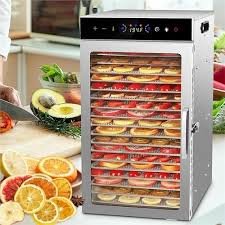
Direct electric resistance heaters draw high continuous power, while diesel-fired burners carry steep fuel bills and the risk of soot contaminating delicate food items. In contrast, closed-loop industrial heat pump systems, such as the Brandsquare DH-K15, recycle ambient thermal energy inside the chamber. This particular design reduces electricity consumption by 50% to 70% compared to traditional heating coils, maintaining energy use around 1.2 to 1.5 kWh per kilogram of dried output for starchy tubers. Calculate your daily utility spend before settling on purchase cost alone.
2. Airflow Direction (Single vs. Bidirectional Circulation)
The most common issue operators encounter with low-cost drying cabinets is uneven moisture removal. Trays directly adjacent to the heating element scorch, while produce stacked in the middle or bottom corners stays soft and damp.
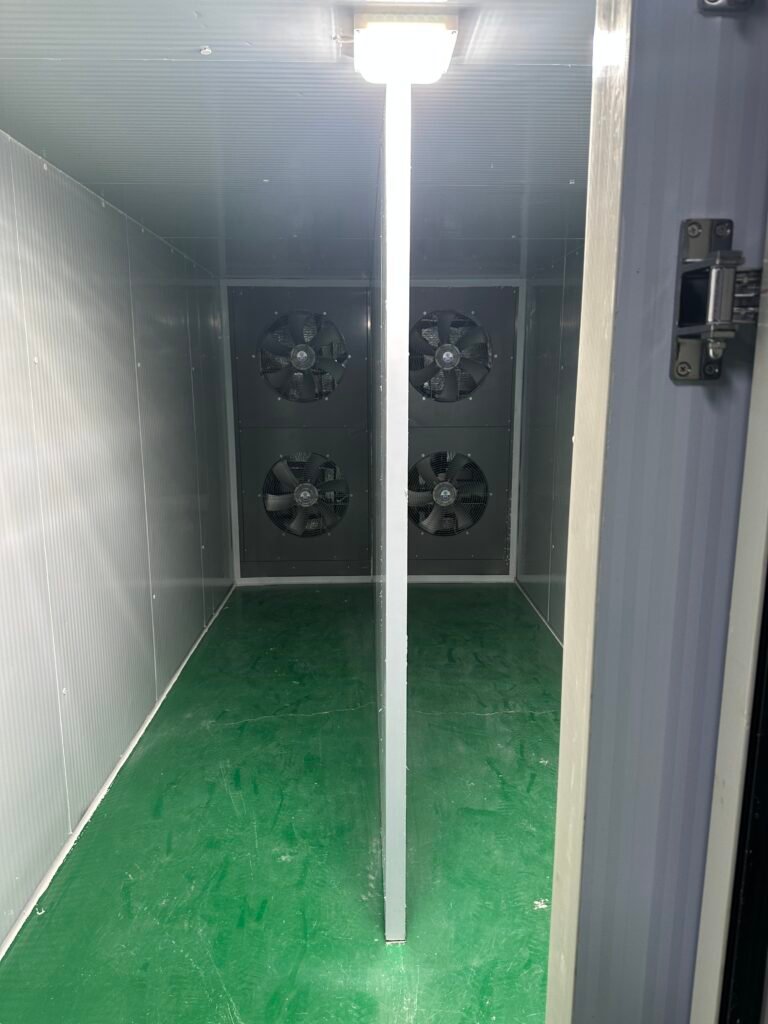
To avoid assigning workers to manually rotate hot trays every two hours, verify whether the system features reversible, bidirectional airflow. The commercial food dryer utilizes automated reversible fans that switch circulation horizontally from left to right and right to left throughout the drying cycle. This ensures identical thermal exposure across all 160 tray positions without manual intervention.
3. Active Dehumidification Capacity
Drying food requires more than simply raising chamber temperature; hot, humid air left stagnant inside an enclosed box creates an oven environment that cooks produce instead of dehydrating it.
A commercial dryer must actively extract airborne moisture and discharge it as liquid runoff. Review the system’s dehumidification rating, measured in liters per hour. A unit handling commercial vegetable or tuber batches needs a dedicated moisture removal setup, to pull internal humidity down continuously without stalling.
4. Tray and Chamber Material Grades
Food safety audits and export standards strictly monitor contact surfaces for rust and chemical leaching.
Food-Contact Surfaces: Ensure trays, internal racking, and trolleys are constructed from certified SUS304 food-grade stainless steel. Cheaper SUS201 stainless or galvanized steel degrades quickly under the organic acids found in tomatoes, ginger, and pineapples.
Chamber Enclosure: Check the interior wall lining. A system featuring double-sided or inner SUS304 insulated polyurethane panels prevents corrosion from washdowns while holding steady thermal retention.
5. Facility Electrical Architecture
Before purchasing an industrial dryer, confirm your site’s electrical infrastructure.
Commercial heat pump chambers generally demand a stable 380V three-phase industrial connection. The DH-K15, for example, operates on a 21.1 kW power input drawing roughly 41.4 Amps under full load. If your workshop only has standard 220V single-phase power, you must budget for a dedicated transformer upgrade or properly sized generator before the machine arrives on-site.
6. Realistic Loading Ratios vs. Finished Output
Please do not confuse fresh raw loading weight with bagged final inventory. High-moisture inputs like cassava, tomatoes, and ginger carry significant water content.
Cassava and Tubers: Require a drying ratio near 2.96:1; an 800 kg raw load yields roughly 270 kg of shelf-stable dry chips.
Tomatoes: A 320 kg fresh input yields approximately 25 kg of dried product over an 11- to 13-hour cycle.
Bird’s-eye Chili: An 800 kg load yields roughly 223 kg dried.
Understanding batch drying ratios helps you calculate exactly how many daily cycles are required to hit your weekly processing targets.
7. Temperature Precision and Recipe Automation
Different crops demand specific thermal conditions. Slicing cassava permits drying temperatures up to 60°C–70°C, whereas delicate herbs, fruits, and ginger lose color, aroma, and essential vitamins if dried above 50°C.
Confirm that the dryer’s control panel allows fine temperature adjustments between 10°C and 75°C and includes programmable recipe storage. A system that stores custom settings allows machine operators to execute consistent runs across day and night shifts with a single touch.
Is Your Business Ready to Upgrade Its Commercial Drying Operations?
Selecting drying equipment requires matching capacity directly to your daily raw harvest and utility setup. Whether you need a standard commercial chamber or high-specification export grade units, Brandsquare provides complete specifications, freight coordination, and technical support.
Continue Learning:
Join the BrandSquare WhatsApp Community
Get machine updates, buying tips and new arrivals straight to your phone.
1 comment on “7 Critical Things to Check Before Buying a Commercial Food Dryer”