
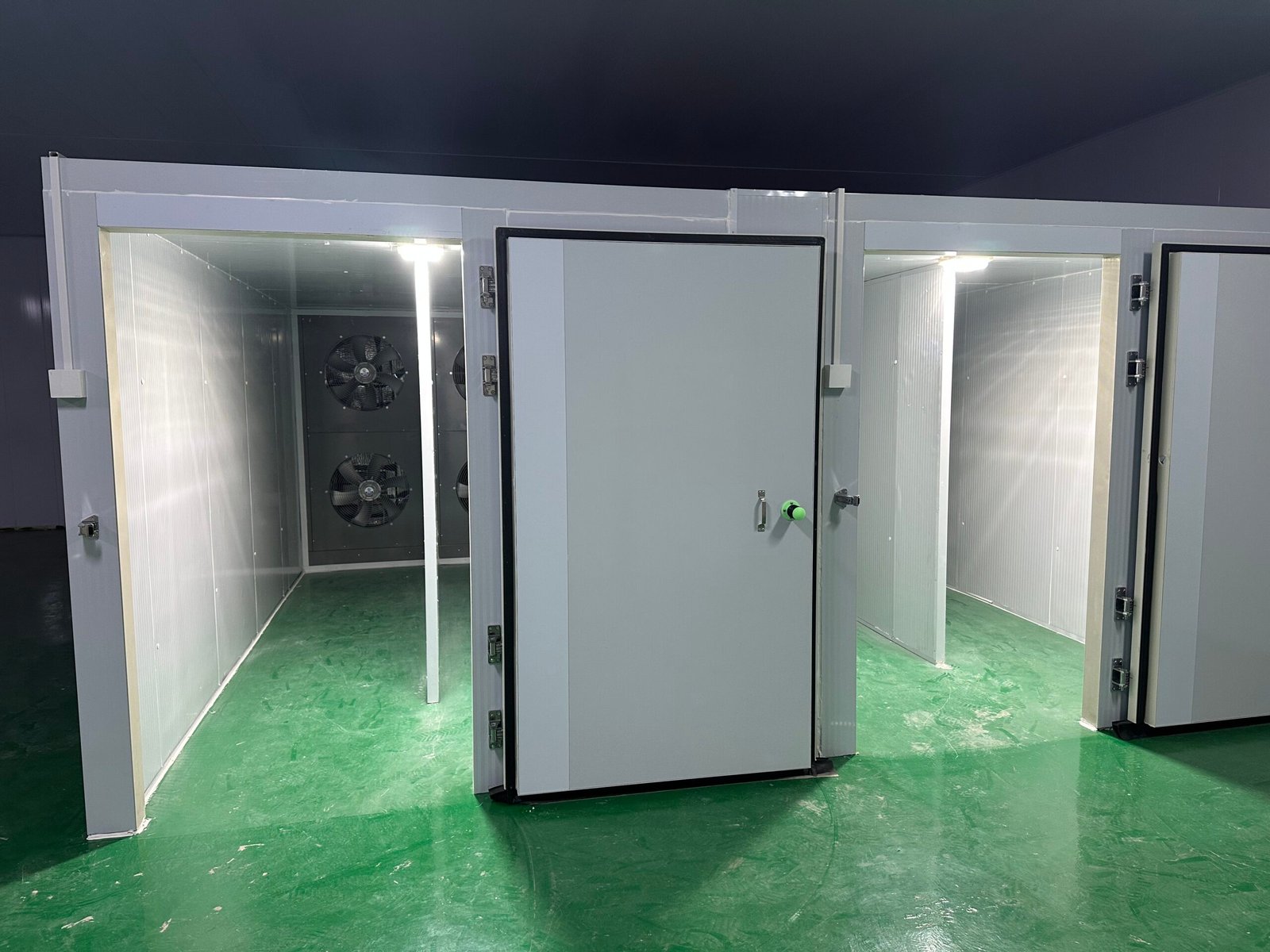
What Is a Heat Pump Food Dryer and How Does It Work?
If you process agricultural produce at commercial scale, drying is often the most critical bottleneck in your entire operation.
Sun drying leaves your harvest exposed to unpredictable rain, dust, birds, and fungal contamination. Traditional diesel burners and electric resistance ovens dry produce faster, but their fuel consumption can quickly eat up your operating profit. Worse still, direct high heat often scorches the outside of your produce while leaving moisture trapped inside.
This is why industrial agro processors are transitioning to closed loop heat pump food drying technology.
A commercial heat pump food dryer, such as the Brandsquare DH K15, is not just a heater. It is an intelligent, energy efficient dehumidification system designed to remove moisture from food under precise temperature and humidity control.
Here is a practical breakdown of how heat pump drying technology works, why it uses up to 70 percent less electricity than conventional ovens, and what makes it essential for high value food processing.
The Core Principle: Moving Heat Instead of Generating It
A standard electric oven works through electric resistance elements. It creates heat by burning massive amounts of electrical power, blowing hot air across your food trays, and venting that hot, moisture laden air straight outside.
A heat pump operates on an entirely different thermodynamic principle. Instead of creating new heat from raw power, it absorbs thermal energy from the air, concentrates it, and continuously circulates it inside an insulated chamber.
It functions like a heavy duty air conditioner running in reverse. By using an internal refrigeration circuit containing a compressor, evaporator, and condenser, the machine extracts water from the air while recycling the sensible heat back into the drying room.
The 4 Step Closed Loop Drying Cycle
The drying process inside an industrial heat pump dryer follows a continuous, automated four stage cycle:
1. Heated Air Absorbs Moisture
The system circulates warm air across the food trays at controlled temperatures between 10 degrees and 75 degrees Celsius. As this air passes over fresh slices of cassava, ginger, pepper, or fruit, it draws out surface moisture and evaporates it into the airflow.
2. The Evaporator Condenses Water Out
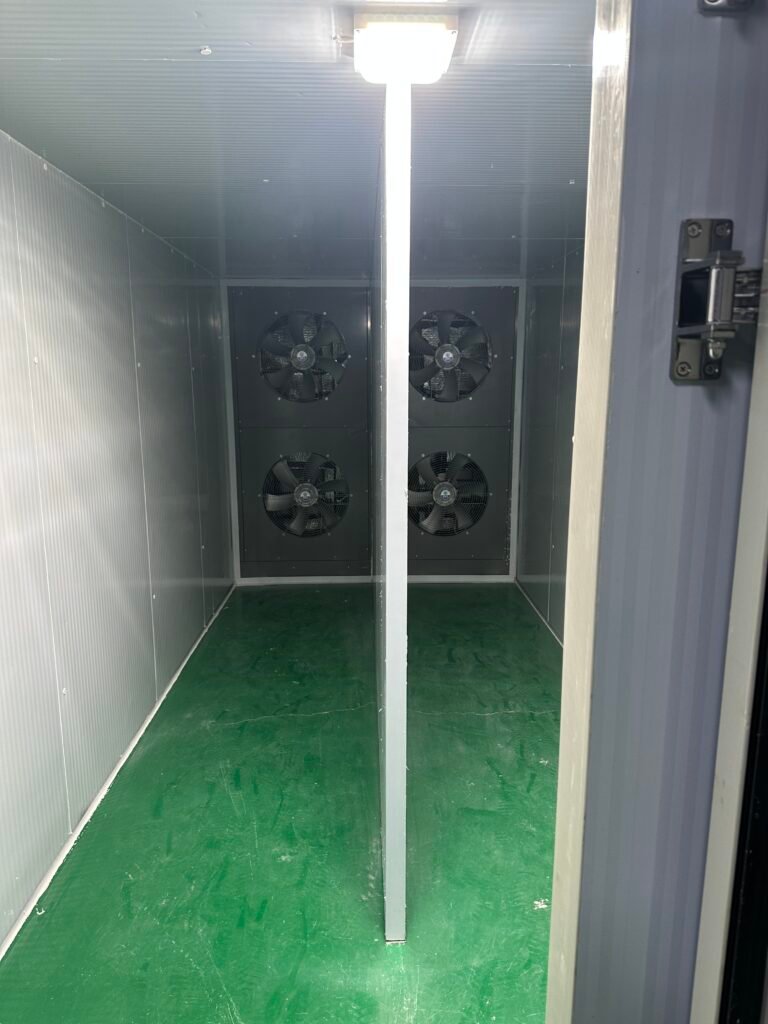
Instead of blowing that moist air outside, the internal fans direct it across the cold evaporator coil. When warm humid air hits this cold surface, the water vapor rapidly cools past its dew point and condenses into liquid water.
3. Continuous Liquid Drainage
The condensed moisture drips into an internal collection tray and flows out of the chamber through a continuous drain pipe. Up to 60 liters of pure liquid water can be extracted from your produce every single hour, without releasing room heat into the surrounding facility.
4. Heat Recovery and Recirculation
After moisture is removed, the now dry air passes through the internal condenser coil. The heat that was absorbed during the cooling phase is transferred back into the dry air, reheating it before circulating it back across your food trays.
Because this loop is completely closed, no dust, flies, or smoke enter the chamber, and no heat is wasted through exhaust chimneys.
Key Components of an Industrial Unit
A commercial unit like the Brandsquare DH K15 is built for heavy duty continuous factory operation. Key engineering elements include:
Emerson Copeland EVI Scroll Compressor: The heart of the drying engine. Enhanced Vapor Injection technology ensures steady heating output and high energy efficiency even during cold ambient morning temperatures.
SUS304 Food Grade Stainless Steel: All internal surfaces and drying trays are fabricated from heavy gauge 304 stainless steel to ensure zero rust, chemical safety, and compliance with national and international export food standards.
Automated Bidirectional Airflow: Dual circulation fans alternate airflow direction horizontally every few minutes. This eliminates chamber hot spots and cold spots, ensuring that produce on top, middle, and bottom trays dries at the exact same rate without requiring manual tray swapping.
Programmable Touchscreen Controls: Operators can store multi stage recipes. For instance, you can set the machine to warm ginger gently at 45 degrees Celsius for three hours, ramp up to 60 degrees for active moisture extraction, and finish at 50 degrees to lock in natural aroma and color.
Why Heat Pump Drying Saves Operational Capital
Energy efficiency is the single biggest advantage of this system.
In conventional electric dryers, 1 kilowatt of electrical power yields less than 1 kilowatt of thermal energy. A commercial heat pump dryer typically achieves a Coefficient of Performance between 3.0 and 4.0. That means for every 1 kilowatt of electricity consumed, the system delivers 3 to 4 kilowatts of usable heat energy into the chamber.
This brings your energy consumption down to roughly 1.2 to 1.5 kilowatt hours per kilogram of dried product, cutting operational utility costs by 50 to 70 percent compared to traditional electric heating elements.
Is a Heat Pump Food Dryer Right for Your Facility?
If your business processes commercial volumes of cassava flour, dried chili peppers, ginger flakes, dried catfish, spices, medicinal herbs, or dehydrated fruit, switching to an automated heat pump dryer protects your product margins, reduces labor overhead, and guarantees export grade hygiene.
Visit brandsquare.shop or contact our technical procurement team today to review equipment specifications, chamber layouts, or delivery options for your processing facility.