
Chaff Cutter Machine: Stop Feed Waste And Improve Livestock Feeding


If you run a livestock farm, you probably know how frustrating it is to watch feed go to waste. Hay, straw, corn stalks, and other roughage can end up scattered around the feeding area, trampled underfoot, or left behind simply because they are difficult for animals to eat.
And when this happens every day, the waste adds up.
This is one reason many livestock farmers look for better ways to prepare their feed. Instead of feeding your animals long stalks and other fibrous materials as-is, a chaff cutter machine cuts them into smaller, more manageable pieces that are easier to handle, mix, and feed.
But buying a chaff cutter is not simply about choosing the machine with the highest capacity or the biggest motor. The type of fodder you work with, how much you need to process, your available electricity as a livestock farmer in Nigeria, and the scale of your farm all matter.
In this guide, we’ll look at how a chaff cutter machine works, the types of fodder it can process, how it can fit into your livestock feeding system, and what to consider before choosing the best fit for your farm.
What Is a Chaff Cutter Machine and How Does It Work?
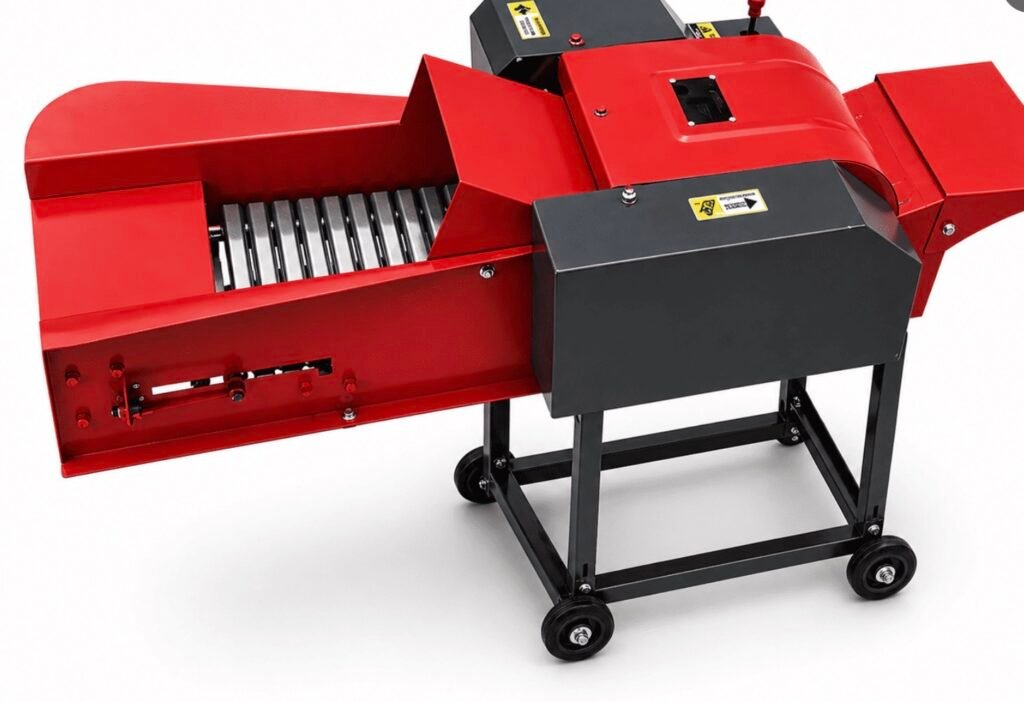
A chaff cutter machine is agricultural equipment designed to chop or shred dry fibrous plant materials into shorter pieces for livestock feeding.
Depending on the operation, suitable materials can include:
- Straw
- Hay
- Sugarcane tops
- Dried corn stalks
- Other suitable dry crop residues
Instead of cutting these materials manually, the operator feeds them into the machine.
For farms preparing large quantities of roughage every day, this can be considerably more efficient than relying entirely on manual cutting.
How Does a Chaff Cutter Work?
The basic process is straightforward.
1. Prepare the Fodder
The crop material is prepared by the farmer before entering the machine.
This may involve removing unwanted debris and ensuring that the material is suitable for the particular chaff cutter.
The BrandSquare chaff cutter is designed primarily for dry fibrous material.
Very wet or extremely green material may not feed through as smoothly and can increase the risk of blockages in some machines.
2. Feed the Material Into the Machine
The prepared straw, hay, stalks, or other suitable roughage is placed into the machine’s input chute.
3. Rotating Blades Chop the Material
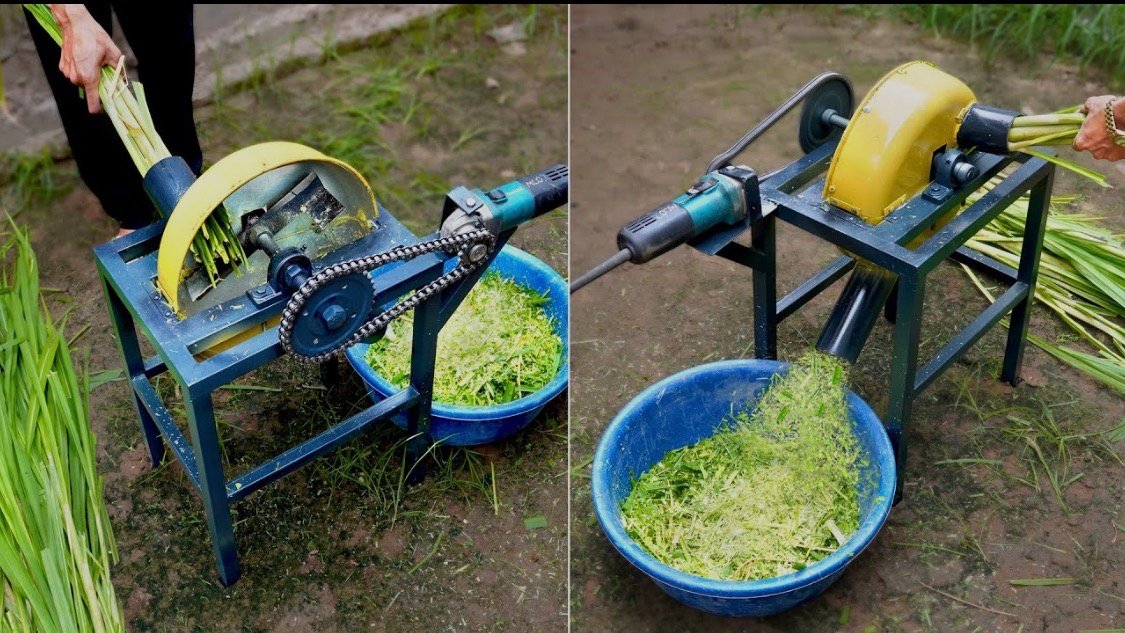
Inside the machine, rotating blades cut the material into shorter, more consistent pieces.
The cutting mechanism is powered by an electric motor.
4. Collect the Chopped Fodder
The processed material exits through the machine’s outlet and can be collected for feeding or further feed preparation.
Watch the chaff cutter in action:
How Can a Chaff Cutter Help Reduce Feed Waste?
One of the biggest reasons farmers consider a chaff cutter is feed management.
A chaff cutter cuts these materials into smaller pieces that are easier to handle, mix with other feed, and offer to livestock.
By preparing feed into a more manageable size, you can reduce spillage and make it easier for animals to eat more of what you provide. A chaff cutter will not remove all feed waste, but it can help you use roughage more efficiently during your everyday feeding, especially when preparing large amounts.
Can a Chaff Cutter Help Livestock Gain Weight?
It can support better feed management, but the machine itself does not directly cause livestock to gain weight.
Animal growth depends on several factors, including:
- Feed quality
- Nutritional balance
- Feed intake
- Animal health
- Breed and age
- Water availability
- General farm management
A chaff cutter’s role is to improve the preparation of suitable roughage.
When chopped fodder is easier to consume and less is wasted, animals may have better access to the feed provided to them.
For farmers focused on livestock growth, the machine should therefore be viewed as one part of a larger feeding system, rather than a substitute for proper animal nutrition.
What Can You Process With a Chaff Cutter?
The BrandSquare chaff cutter is designed for dry fibrous agricultural materials.
Potential inputs include:
Straw
Useful for farms using crop residues as part of their livestock feeding system.
Hay
Can be chopped into shorter pieces for easier handling and feeding.
Sugarcane tops
A potential roughage source that can be processed into smaller pieces.
Dried corn stalks
Crop residues can be chopped for use as livestock roughage.
The exact suitability of a material can depend on its condition and the machine model, so buyers should confirm material compatibility before purchasing.
Who Needs a Chaff Cutter Machine?
If you’ve reviewed data and your business is currently losing hours to manual chopping or money to trampled feed, mechanizing your feed prep is the smartest way to protect and increase your profit margins. A chaff cutter is a game-changer for:
Cattle & Dairy Farms: Quickly process the massive volumes of daily roughage needed, without the exhausting manual labor.
Goat & Sheep Farms: Stop picky eaters from wasting food by cutting tough stalks down to a bite-sized, easy-to-chew mix.
Horse Stables: Create easily portioned, manageable hay rations.
Livestock Cooperatives & Feed Businesses: Speed up your bulk fodder processing for shared use or local resale.
Choosing the Right Chaff Cutter Capacity
Your farm may not need the largest machine.
The BrandSquare chaff cutter is available in six capacity options, ranging from 3,000 kg/hour to 15,000 kg/hour.
| Capacity | Motor Power |
| 3,000 kg/h | 4 kW |
| 3,800 kg/h | 4 kW |
| 4,800 kg/h | 5.5 kW |
| 6,800 kg/h | 7.5 kW |
| 8,000 kg/h | 15 kW |
| 15,000 kg/h | 18–22 kW |
The capacity refers to the approximate amount of raw fodder the machine can process / hour under operating conditions.
A smaller farm may not need an industrial-scale machine, while a commercial feed-processing operation may require significantly greater throughput.
The right choice you make should therefore be based on daily feed requirements, herd size, available electricity, operating schedule, and future production plans.
What Should You Check Before Buying a Chaff Cutter?
Before purchasing, consider the following:
1. Electricity Supply
The BrandSquare chaff cutter is electrically powered.
Smaller models use lower-power motors, while larger models require substantially more power.
Buyers should confirm that their farm or processing facility has an appropriate electrical supply before ordering.
Some larger models may require a three-phase connection.
2. Available Space
The machine is designed for stationary installation.
It should be securely fixed to a suitable floor or heavy frame to prevent excessive movement and vibration during operation.
3. Material Compatibility
Confirm that the material you intend to process is suitable for the selected model.
Dry fibrous material is the primary application described for this machine.
4. Maintenance
Like any other mechanical equipment, a chaff cutter requires routine maintenance.
Blades should be inspected and sharpened or replaced when necessary.
The belt drive, motor bearings, and electrical connections should also be checked regularly.
Proper maintenance can help keep the machine operating efficiently.
Why Choose an Electric Chaff Cutter?
The BrandSquare chaff cutter uses an electric motor rather than a gasoline engine.
This makes it particularly suitable for a fixed farm or feed-processing location where reliable electricity is available.
The available models range from 4 kW to 18–22 kW, allowing you as a buyer select a machine based on the scale of your operation.
For businesses that already have suitable electrical infrastructure, an electric machine can provide a practical solution for regular feed preparation.
Why Buy Your Chaff Cutter From BrandSquare?
Choosing the right machine is only part of the purchasing decision, and importing agricultural machinery into Nigeria can be a logistical headache.
A customs delay or one wrong supplier choice can derail your entire production schedule. At BrandSquare, we don’t just sell you a machine; we act as your on-the-ground partner to handle the supplier verification, quality checks, and clearing process, stripping the financial risk out of the equation.
BrandSquare provides industrial and commercial machinery for Nigerian businesses and factories, including equipment for agribusiness and processing operations.
A chaff cutter should definitely be considered part of a complete livestock management system. Proper nutrition, animal health, feed formulation, and good farm management remain essential for achieving healthy livestock growth on your farm.
If you are considering a chaff cutter, BrandSquare can help you identify a suitable model based on your intended application and production requirements.
Visit brandsquare.shop or send a message to BrandSquare on Instagram or WhatsApp to make an inquiry about the available chaff cutter models.