
How to Match Your Raw Material to the Right Briquette Machine
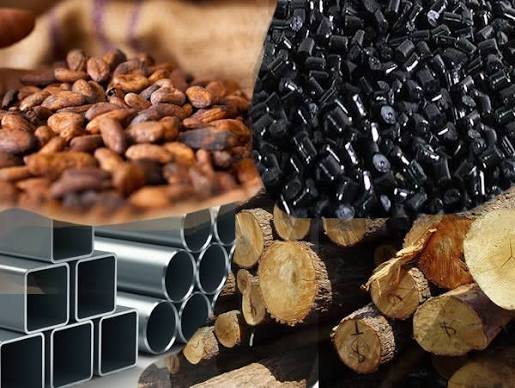
One of the most expensive assumptions in agro-processing is believing that any briquette press can compact any type of waste.
Entrepreneurs regularly buy heavy industrial machinery expecting to compress raw sawdust, rice husks, and charcoal dust in the exact same chamber. Within two days, the die jams, motors overheat, or the pressed briquettes crumble to powder the moment they hit the collection floor.
Every raw material has unique physical characteristics. Choosing the right machine comes down to one question: What specific waste stream do you have free, consistent access to every single morning?
Scenario A: You Have Sawmills, Wood Shavings, or Fibrous Crop Stalks
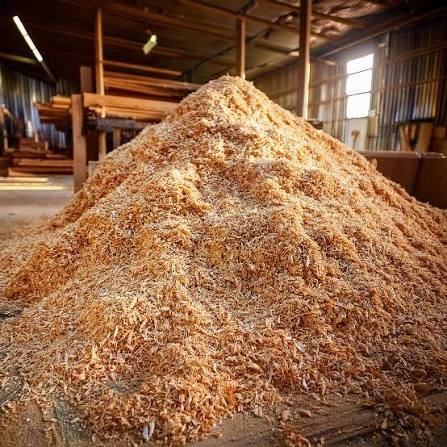
If your factory sits near timber clusters, furniture workshops, or maize shellers, your primary input is raw biomass.
Raw wood fibers contain natural lignin, which is an organic compound that acts as a natural glue when subjected to extreme friction and heat.
The Matching Machine: You need a High-Pressure Screw Extrusion Press.
How It Operates: A heavy-duty screw auger forces loose wood particles through a tapered metal die under high mechanical pressure. The friction generates intense heat, melting the internal lignin. As the material exits the nozzle, it cools into dense, solid wooden logs with a hollow center.
You do not need to buy starch or chemical binders. The wood bonds itself. These dense logs burn hot and long, making them ideal replacements for commercial firewood in industrial boilers, bakeries, and kilns.
But your input material must be completely bone-dry (under 12% moisture) and ground down to sawdust size before entering the hopper.
Scenario B: You Have Charcoal Dust, Fines, or Carbonized Residue
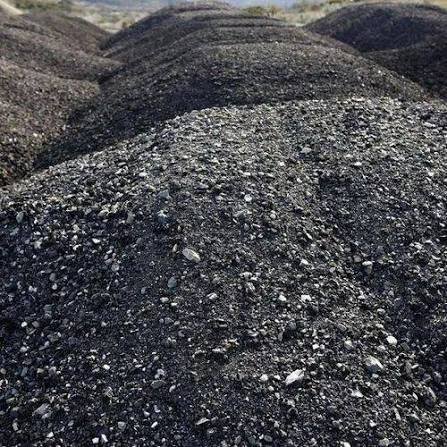
Whenever lump charcoal is bagged, moved, or transported across distribution networks, about 15% to 30% of it breaks down into loose charcoal dust.
Charcoal producers and wholesale depots usually have mountains of this black dust sitting behind their yards, sold for nothing tangible or simply washed away by rain.
The Matching Machine: You need a Rotary Roller Charcoal Briquette Press
The Fundamental Difference: Because charcoal has already been burned, all natural lignin has been stripped away. Charcoal dust cannot bond itself through friction alone. You must mix it with a small amount of liquid binder, such as cooked cassava starch or bentonite clay, before pressing.
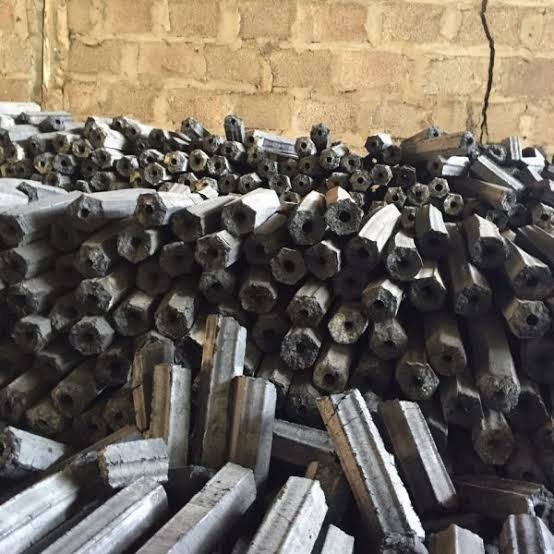
How It Operates: The damp, bound charcoal mixture drops between two counter-rotating steel rollers dimpled with matching mold cavities. As the rollers turn together, they pinch the mixture into uniform shapes, such as smooth pillow briquettes, spheres, or hexagonal blocks.
The Throughput Advantage: Because the machine does not rely on massive friction to melt fibers, it runs faster. A 7.5 kW roller press can output up to 2,000 kg per hour, turning an entire yard of discarded dust into premium barbecue fuel in a single afternoon.
Now, Choose a Screw Extrusion Press if:
Your feedstock is raw wood sawdust, rice husks, or chopped corn cobs.
You want to produce solid, log-style biomass fuel without purchasing ongoing binders.
You have access to three-phase industrial electrical power to drive the high-torque motor.
Choose a Roller Press if:
Your feedstock is charcoal powder, coal fines, or carbonized agro-waste.
You want to supply retail-ready, clean-burning barbecue briquettes to supermarkets, restaurants, and export markets.
You need massive hourly throughput (1 to 2 tonnes/hour) with moderate electrical draw.
Match the machine to the physical reality of your raw material, and your briquette line will run reliably from day one.
Ready to Scale Your Production?
Don’t let guesswork stall your facility. Whether you are setting up an industrial biomass line or expanding your commercial charcoal output, Brandsquare supplies heavy-duty extrusion presses, industrial roller systems, and complete turnkey processing lines engineered for maximum uptime.
[Get in Touch with Brandsquare Today]
Continue Learning
Beginners Guide To Biomass Briquette Production
What Happens When You choose The Wrong Machine For A Production Process
Join the BrandSquare WhatsApp Community
Get machine updates, buying tips and new arrivals straight to your phone.