
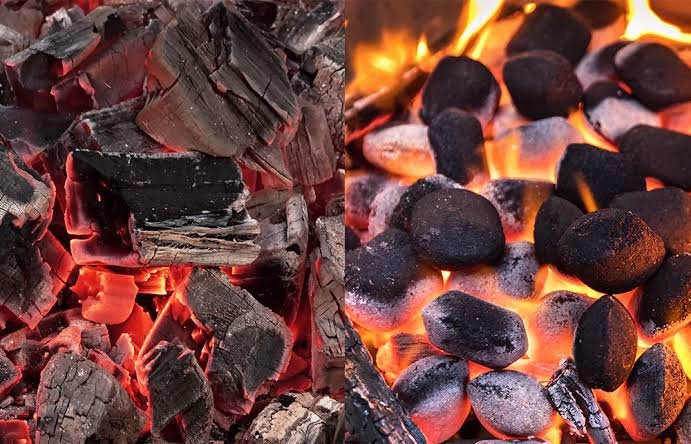
How Charcoal Producers Can Recover Value From Charcoal Dust
Every charcoal producer has the same problem: charcoal dust. It builds up in the kiln, in storage and in every bag you move. It is loose, it is hard to sell. Pressed into briquettes, it becomes a product again.
Why is charcoal dust such a big loss?
Charcoal breaks as it is being handled, transported and bagged. Typically 15 to 30% of it ends up as dust and small fragments.
Customers can’t use loose dust well, and it makes a mess. So it is thrown away or sold at a heavy discount. That is charcoal you already paid to produce.
Over a year, that adds up to a lot of lost income. The dust is still charcoal, and a press turns it back into something you can sell at full price or more.
How do you turn charcoal dust into briquettes?
You press it into uniform shapes. The process has six steps:
- Collect and sieve. Gather dust from kilns, storage and bagging areas. Crush any lumps larger than 5 mm.
- Mix in a binder. Charcoal has no natural glue left after burning, so it needs one. Cassava starch is the most common choice, mixed in at about 5 to 10% of the charcoal’s weight. Mix the binder in thoroughly. A poorly mixed briquette crumbles when it is handled or stored, so this step decides how hard and durable the finished product is.
- Press. The mixture goes into a roller press, where two rollers squeeze it into moulded shapes.
- Separate. A mesh or vibrating screen breaks apart joined briquettes.
- Dry. Fresh briquettes are soft. Dry them in the sun for 1 to 3 days, or in a dryer for 2 to 6 hours.
- Pack and sell. Bag them in 5, 10 or 25 kg bags once fully dry.
Never bag briquettes that are still damp. They go mouldy and break apart.
What does the briquette press do?
The Model 360 charcoal briquette press does the pressing step.
- Output: up to 2,000 kg an hour
- Motor: 7.5 kW, three-phase power
- Shapes: pillow, ball, hexagonal, block or custom, set by the roller dies
At that speed it is not a machine you run all day. A business with 1 tonne of charcoal dust a day could press a week’s dust in under an hour.
Why do briquettes earn more than loose charcoal?
Loose charcoal is a commodity. Briquettes are a product.
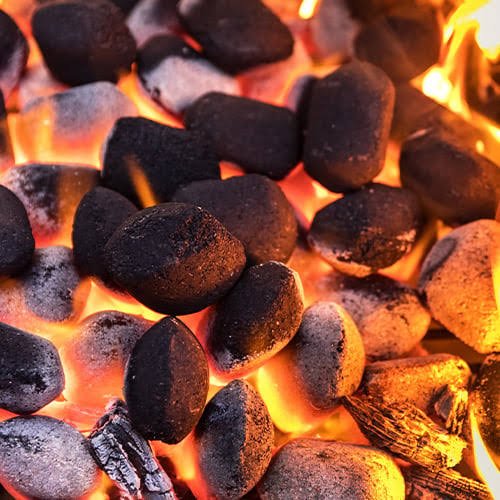
They have a uniform shape, burn at an even rate and last longer. They also pack cleanly and make less mess for the user. That is why shaped briquettes can sell for 20 to 50% more than the same weight of loose charcoal, and why buyers in the BBQ, hospitality and export markets ask for them.
Export buyers ask for uniform shape, consistent size, low ash and high heat value. Briquettes pressed from good charcoal dust can meet that, and printed, branded packaging helps them sell to hotels and restaurants.
What do you need before you start?
- A steady supply of dust. Your own kilns, other producers or traders can all be sources.
- A binder supply. The binder is a small part of your production cost, but it has a big effect on briquette quality.
Cassava starch is widely available and burns cleanly. - A drying area. Concrete pads with wire racks work well in sunny weather. A tunnel dryer helps year-round.
- Three-phase power. The machine needs it.
- Your shape. Choose it when you order, based on your target market.
Ready to turn charcoal dust into income?
Send a message to the Brandsquare team. Tell us how much charcoal dust you collect and the briquette shape you want, and we will reply with a full landed cost quote.