
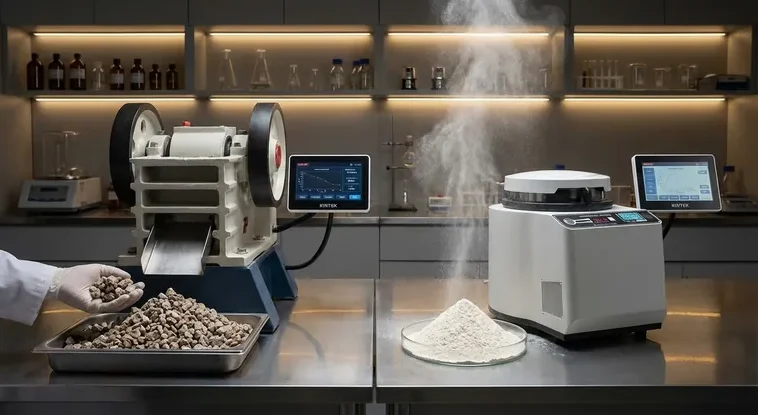
What Is the Difference Between a Powder Crusher, Pulverizer, and Grinder?
When setting up a food processing, spice, or feed production business, choosing size reduction equipment can be confusing.
Suppliers use terms like “crusher,” “grinder,” and “pulveriser” interchangeably.
However, buying a high-speed powder crusher when what you actually need is a slow flour grinder, or choosing a light disc mill when you need to pulverise fibrous agricultural waste, can create operational bottlenecks along the way.
In engineering and commercial processing, these three machines perform completely different jobs in the size-reduction process.
Knowing the difference is what prevents you from buying an oversized machine that wastes power, or an underpowered machine that ruins your raw material.
The Core Difference at a Glance
What Does a Crusher Do?
A crusher generally reduces larger pieces of material into smaller pieces.
The purpose is often to break down material into a manageable size for further processing.
Depending on the design, crushing may involve mechanisms such as:
- Impact
- Compression
- Shearing
- Cutting
A crushing machine may therefore be used as an initial size-reduction step.
What Is a Pulveriser?
A pulveriser is designed to reduce material into much finer particles.
Instead of simply breaking large pieces into smaller pieces, pulverisation focuses on producing a fine or powdered material.
What Does a Grinder Do?
A grinder reduces material through a grinding process, usually with the objective of achieving a particular particle size or consistency.
Different grinding systems use different mechanisms.
Depending on the machine, grinding may involve rotating components, impact, friction, compression or other forms of mechanical size reduction.
So Are They the Same Machine?
There can be overlap between the terms, and manufacturers may use different names for machines with similar functions, but they are not the same.
The terms only describe different levels or approaches to size reduction.
Why Does Material Matter?
A machine that works well with one dry material may not be suitable for another.
Materials can differ in:
- Hardness
- Moisture content
- Fibre content
- Oil content
- Density
- Texture
- Size
For example, a dry crop may behave very differently from a fibrous material.
This is why simply asking for a powerful powder machine is usually not enough information to recommend the right equipment.
What About Screens and Sieves?
Screens and sieves can play an important role in determining the size of the material leaving a machine.
A finer screen can restrict larger particles from passing through until they have been reduced sufficiently.
This means the screen specification can influence the final particle size.
Which Machine Should a Buyer Choose?
The right choice depends on the intended process.
Before selecting a powder-processing machine, consider:
- What material will be processed?
- What is the starting size?
- Is the material dry?
- What final particle size is required?
- How much material needs to be processed per hour?
- What power supply is available?
- Will the material require more than one processing stage?
If your business is requiring coarse size reduction, it may have different requirements from another business producing a fine powder for commercial use.
The words crusher, grinder and pulveriser can be useful starting points, but they should not be the only basis for choosing equipment.
At Brandsquare, we help processors evaluate their raw materials and output targets before recommending equipment. If you are setting up a milling, spice, or powder processing line, we ensure the machinery you invest in matches your operational reality from day one.