
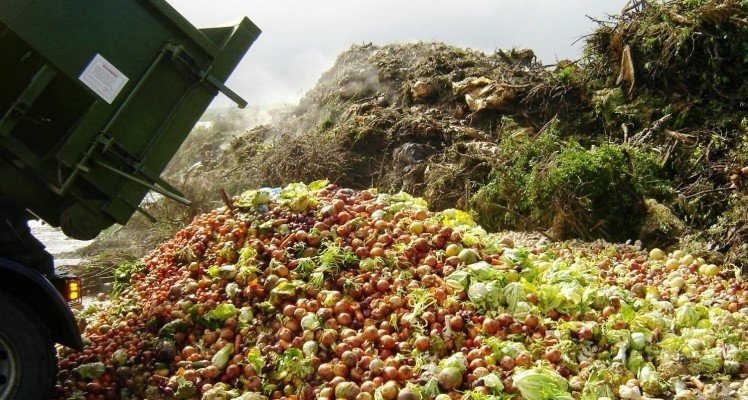
Monetizing Agricultural By-Products: Turning Rice Husks, Fine Bran, and Press Cakes into Commercial Feeds
In commercial agro-processing, the line between a thin operating margin and sustainable enterprise profitability is rarely determined by primary product yields alone.
Whether operating a multi-ton rice milling complex or an edible oil expelling plant, processing raw crops inherently generates substantial secondary biomass: fibrous outer husks, nutrient-dense bran layers, and protein-packed residual seed cakes.
Historically, many small-to-medium processors across Sub-Saharan Africa treated these fractions as disposal liabilities. Husks were openly burned, bran was sold for negligible sums at the farm gate, and unmanaged expeller residue frequently spoiled in storage yards.
However, escalating feed costs across the livestock, poultry, and aquaculture sectors have created an insatiable market for high-grade domestic feedstocks. By integrating secondary recovery mechanics into standard processing lines, commercial processors can transform secondary by-products into high-demand, reliable revenue streams.
1. The Nutritional and Market Profile of Processing Residues
To monetize processing residue effectively, mill managers must evaluate the nutritional chemistry and functional utility of each by-product stream:
| Processing Residue | Originating Machinery Line | Primary Nutritional Property | Primary Commercial Application |
| Fine Rice Bran Powder | 5-in-1 Rice Mill (Bran Grinder Unit) | 12%–15% Crude Protein, 14%–18% Fat, Vitamin B complex | High-energy base meal for swine, poultry, and dairy feeds |
| Rice Husks (Hulls) | 5-in-1 Rice Mill (Hulling Stage) | High Crude Fiber (35%+), High Silica, Low Digestibility | Pellet binders, poultry deep litter, biomass boiler fuel |
| Groundnut Press Cake | Spiral Expeller (GD Series / YJ-1) | 45%–50% Crude Protein, Residual Lipids, High Amino Acids | Core protein meal for aquaculture and poultry finisher diets |
| Sesame Press Cake | Spiral Expeller (GD Series) | 40%–42% Crude Protein, High Methionine & Minerals | Specialized poultry mash and ruminant feed supplements |
2. Fine Rice Bran: Unlocking Value at the Milling Drum
During standard grain whitening, high-speed abrasive rollers strip the fibrous outer husk and the nutrient-dense aleurone layer (bran).
In fragmented operations, this material is discharged unevenly, picking up dirt and foreign matter from the facility floor. In modern integrated processing, such as BrandSquare’s BB-N70-21 Commercial 5-in-1 Rice Mill, the unit routes raw paddy through a closed-loop mechanical sequence:
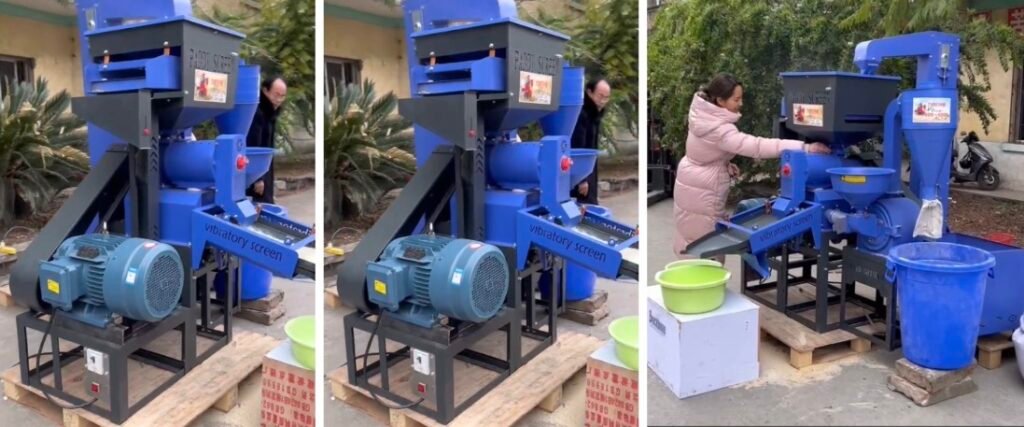
- Automated Loading: The motorized bucket elevator lifts ground-level paddy directly into the cleaner hopper.
- Pre-Milling Destoning: High-frequency vibration (637 beats/min) filters out stones and heavy field grit before milling begins.
- Single-Pass Whitening: Inside the 2,200 RPM milling chamber, the outer husk and bran layer are stripped clean from the white grain.
- Primary Grain Grading: Whole polished rice and broken fragments pass through a 3-way classifier for tiered bagging.
- Secondary Bran Recovery: Instead of discarding the stripped bran, an integrated fine bran grinder pulverizes it on the spot into commercial-grade feed powder.
Commercial Utility and Economics
- Bulk Volume: Bran constitutes roughly 8% to 10% of total paddy weight. A commercial unit operating at a median capacity of 500 kg/hour generates 40 kg to 50 kg of pure, unadulterated fine bran powder per operating hour.
- Value Addition: Loose, dirty husk-mixed bran commands low market value. In contrast, cyclone-collected fine bran powder (ground to 2.0 mm screen fineness) is purchased directly by commercial feed mills as an energy-dense carbohydrate and lipid base, yielding steady daily revenue alongside bagged polished white rice.
3. Oil Expeller Press Cakes: The Standard Protein Meal
In mechanical oil pressing, extracting virgin oil leaves behind dense, dehydrated solid residue known as oil cake.
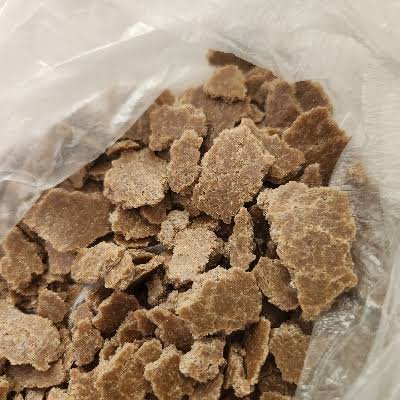
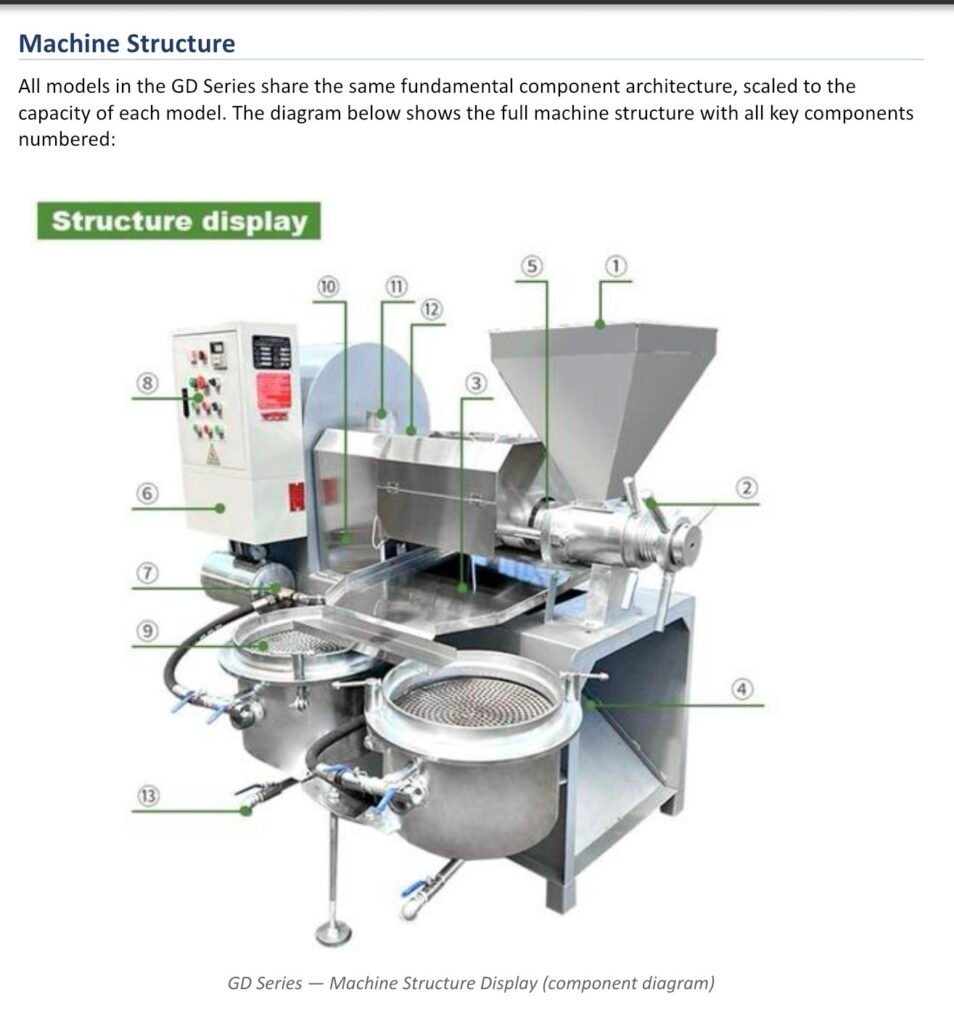
Because industrial spiral expellers, such as the BrandSquare GD Series, rely entirely on physical screw compression and controlled pre-heating without chemical solvents like hexane, the resulting cake retains intact, un-denatured proteins and natural digestible fats.
+————————–+———————–+————————–+
| Processing Feedstock | Average Cake Fraction | Protein Concentration |
+————————–+———————–+————————–+
| Shelled Peanuts/Groundnut| 50% – 60% of weight | 45% – 50% Crude Protein |
| Raw Sesame Seeds | 45% – 55% of weight | 40% – 42% Crude Protein |
| Soybeans | 80% – 85% of weight | 44% – 48% Crude Protein |
+————————–+———————–+————————–+
(Data based on mechanical expelling parameters of GD-60 through GD-500 industrial models).
Monetization Pathways:
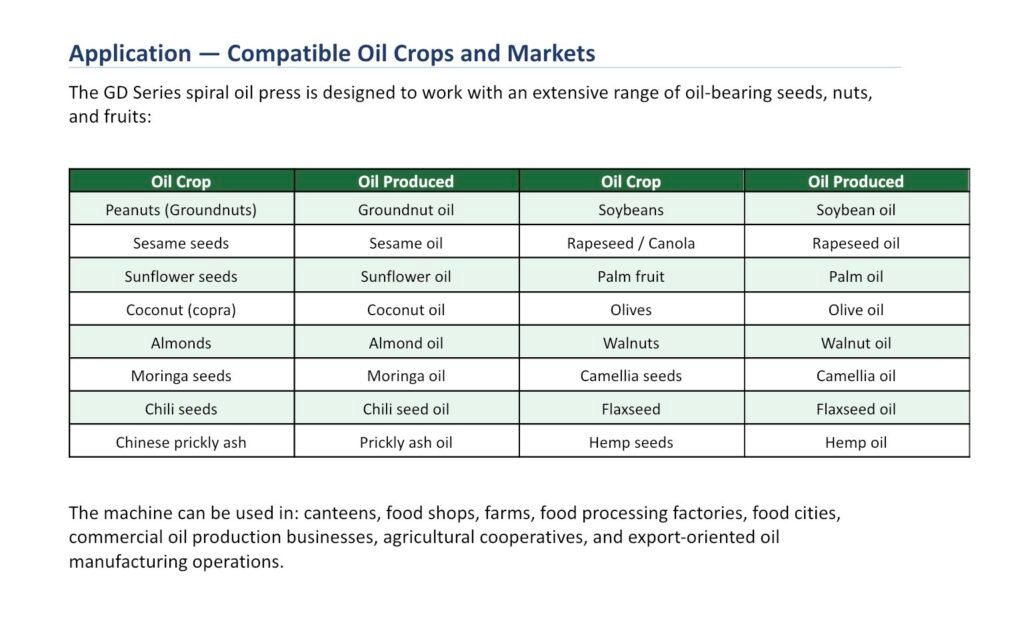
- Direct Kuli-Kuli & Aquafeed Compounding: Groundnut cake discharged from a GD-100 or GD-125 expeller exits as hard, sanitized, low-moisture flakes. Rich in essential plant proteins, it serves as the foundational alternative to costly imported fishmeal and synthetic amino acid packs in catfish pellet production.
- On-Farm Closed-Loop Operations: Livestock operators who grow and press their own oilseeds can route 100% of the discharged cake into on-farm feed compounding, drastically offsetting retail bagged feed purchases while generating cash flow from cold-pressed culinary oil sales.
4. Operational Best Practices: Preventing Aflatoxins and Spoilage
Transforming by-products into commercial feeds requires strict post-processing quality control. Secondary streams carry high lipid and organic loads that demand careful handling:
- Moisture Control: High humidity triggers fungal growth and lethal aflatoxin accumulation, particularly in groundnut press cakes. Expeller residue must be laid out on clean, elevated drying racks or passed through a low-temperature dryer until moisture levels drop below 10% before bagging.
- Manage Lipase Activation in Rice Bran: Raw rice bran contains active lipase enzymes that rapidly hydrolyze natural fats into free fatty acids, turning the product rancid within 72 hours. Mechanical fine-grinding combined with friction heat partially stabilizes the bran, but batches should be bagged in moisture-proof polypropylene sacks and dispatched to feed compounders rapidly.
- Avoid Floor Contamination: Commercial feed compounders reject grain residues containing grit or sand. Utilizing enclosed processing machinery with integrated cyclones and dedicated cake chutes ensures the by-product remains food-grade and commands maximum market pricing.
Expanding Enterprise Margins
Sustainable industrial agribusiness does not stop at primary extraction. By capturing, sorting, and refining every fractional output of harvested grain and oilseeds, and monetizing agricultural by-products, commercial operators build diversified revenue streams that insulate against crop market fluctuations.
Investing in integrated processing machinery, equipped with multi-tier grading, secondary bran pulverizers, and continuous spiral cake discharge, ensures zero biological waste leaves the facility floor unmonetized.
To evaluate integrated 5-in-1 rice mills and commercial GD-Series spiral expellers engineered for maximum secondary by-product recovery, review complete equipment specifications and direct factory supply schedules at BrandSquare.shop.
Join the BrandSquare WhatsApp Community
Get machine updates, buying tips and new arrivals straight to your phone.