

Cold Press vs. Hot Press vs. Solvent Extraction: What Commercial Edible Oil Processors Need to Know
Selecting an extraction method is the most consequential operational decision an edible oil processor will make. The extraction method you choose dictates your factory setup costs, the quality and purity of your oil, and which wholesale markets you can sell into.
When evaluating cold press vs hot press vs solvent extraction, commercial processors must balance raw oil yield against equipment complexity, operational overhead, and consumer market value.
Each method uses fundamentally different mechanical or chemical processes to separate oil from seeds like groundnut, sesame, soybean, and sunflower. Understanding these core operational differences ensures you invest in the right processing system for your commercial scale.
1. The Three Commercial Extraction Methods Explained
Cold Press Extraction
In cold pressing, seeds are crushed using purely mechanical force via a motorized screw expeller. No external heat is added to the barrel, though natural friction inside the screw generates mild warmth that rarely exceeds 50°C to 60°C.
- The Output: 100% natural, unrefined virgin oil that preserves original micronutrients, antioxidants, color, and natural flavor.
- The Trade-Off: Oil extraction yield is slightly lower than heated methods, but the oil commands premium retail prices in health, culinary, and cosmetic markets.
Hot Press Extraction
Hot pressing introduces external heat, either by conditioning seeds in an upstream roaster or using electrical heating bands along the expeller barrel. The heat softens oilseed cells, lowers oil viscosity, and allows the screw to squeeze out more liquid.
- The Output: Significantly higher initial volume per kilogram of seed, with a distinct roasted aroma common in commercial groundnut and sesame oils.
- The Trade-Off: High temperatures can darken the oil and increase the need for thorough post-extraction vacuum filtration.
Solvent Extraction (Chemical Processing)
Solvent extraction is an industrial-scale chemical process rather than a mechanical press. Raw seeds are rolled into thin flakes and bathed in a chemical hydrocarbon solvent, most commonly food-grade hexane—which dissolves and washes out virtually all lipids. The oil-solvent mixture is then distilled at high temperatures to evaporate the hexane, followed by chemical bleaching, neutralization, and deodorization.
- The Output: The highest possible yield, extracting up to 98% to 99% of total seed oil content.
- The Trade-Off: Requires tens of millions of Naira in capital, explosion-proof factory infrastructure, heavy water and power consumption, and environmental permits to manage toxic solvent vapors. It is impractical for decentralized small-to-medium enterprises.
2. Side-by-Side Comparison for Commercial Processors
| Decision Metric | Cold Press (Mechanical) | Hot Press (Thermal / Mechanical) | Solvent Extraction (Chemical) |
| Primary Mechanism | Progressive screw pressure | Controlled heat + screw pressure | Chemical solvent wash (Hexane) |
| Extraction Yield | Moderate (70%–85% of total seed oil) | High (85%–92% of total seed oil) | Maximum (98%+ of total seed oil) |
| Processing Temperature | Natural friction only (<60°C) | 90°C – 130°C pre-heating | High-heat chemical distillation |
| Capital Investment | Low to Moderate (Accessible for SMEs) | Low to Moderate (Accessible for SMEs) | Extreme (Heavy industrial plant) |
| Oil Quality & Purity | Unrefined, pure, virgin grade | Natural, fragrant, clear after filtering | Refined, stripped, chemically treated |
| Seed Cake Quality | High-protein animal feed or snack base | Sanitized, high-protein animal feed | Spent meal, requires solvent desolventizing |
3. Why Most Commercial SMEs Choose Mechanical Spiral Expellers
For commercial processors operating across Nigeria and West Africa, mechanical spiral expellers—such as the BrandSquare GD Series, provide the best balance between extraction efficiency and equipment investment.
Modern spiral expellers eliminate the historical downside of mechanical pressing through three integrated features:
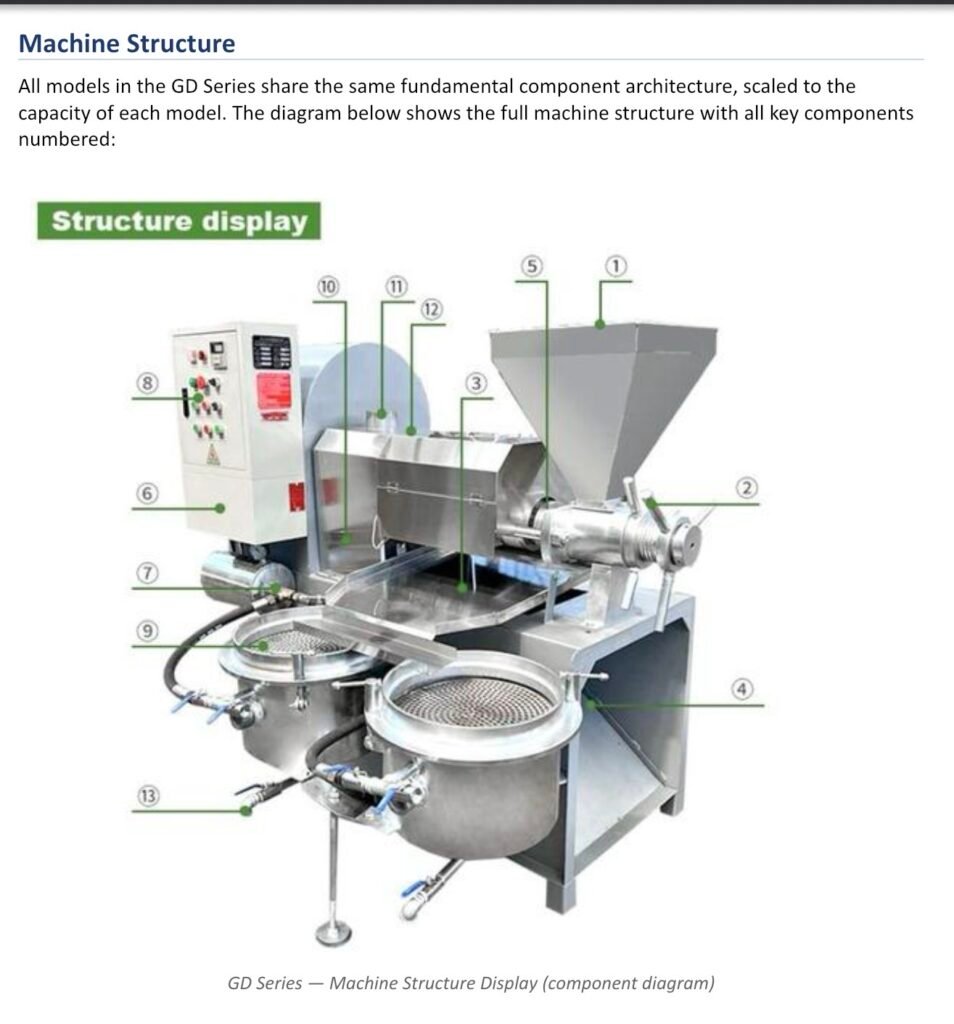
- Dual Hot and Cold Capability: The GD Series features an automatic digital control panel and pre-heating bands. Operators can run pure cold-press batches for premium organic buyers, or switch on the heating units to maximize extraction volume when wholesale bulk pricing demands maximum liters per hour.
- Multi-Stage Compression: High-alloy steel spiral snails apply progressive compression across multiple chamber zones. This extracts high yields without requiring chemical baths.
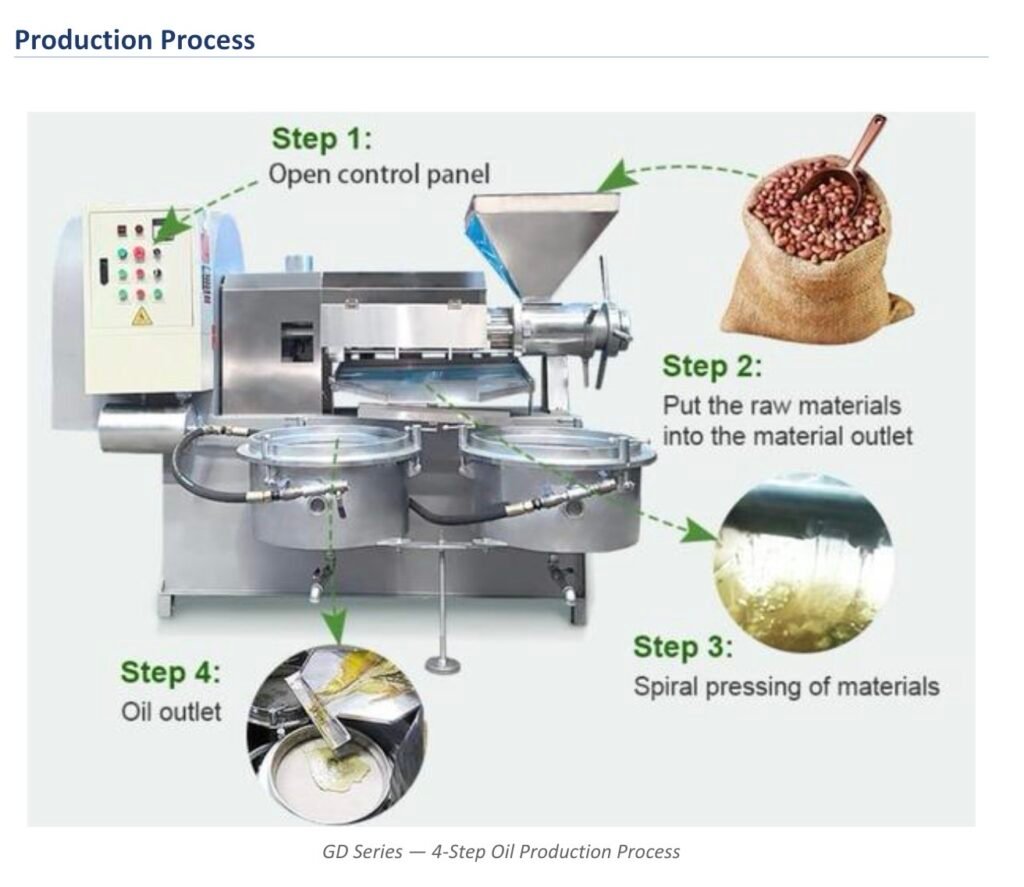
- Built-in Vacuum Filtration: Integrated dual vacuum filter tanks pull raw crude oil through fine filter cloth immediately after it leaves the pressing cage. This delivers clarified, retail-ready cooking oil straight from the machine with no secondary chemical treatment required.
The Takeaway
When weighing cold press vs hot press vs solvent extraction, solvent plants remain restricted to massive multinational conglomerates due to safety regulations and capital demands.
For growing agro-processors, mechanical spiral expellers offer complete operational control: high oil recovery, direct-from-machine vacuum clarity, and the flexibility to serve both volume-focused wholesale buyers and high-margin natural food markets.
Continue Reading:
- Commercial Groundnut & Sesame Oil Production in Nigeria
- Multi-Crop Flexibility: How to Run a Commercial Oil Press Across Changing Harvest Seasons
- The Economics of Small-Scale Cold-Pressed Oil Production in Nigeria: Costs, Yields, and Margins
Looking to equip your edible oil processing facility with commercial spiral expellers ranging from 30 kg/hr to 500 kg/hr? Review full machine technical specifications at BrandSquare.shop.