
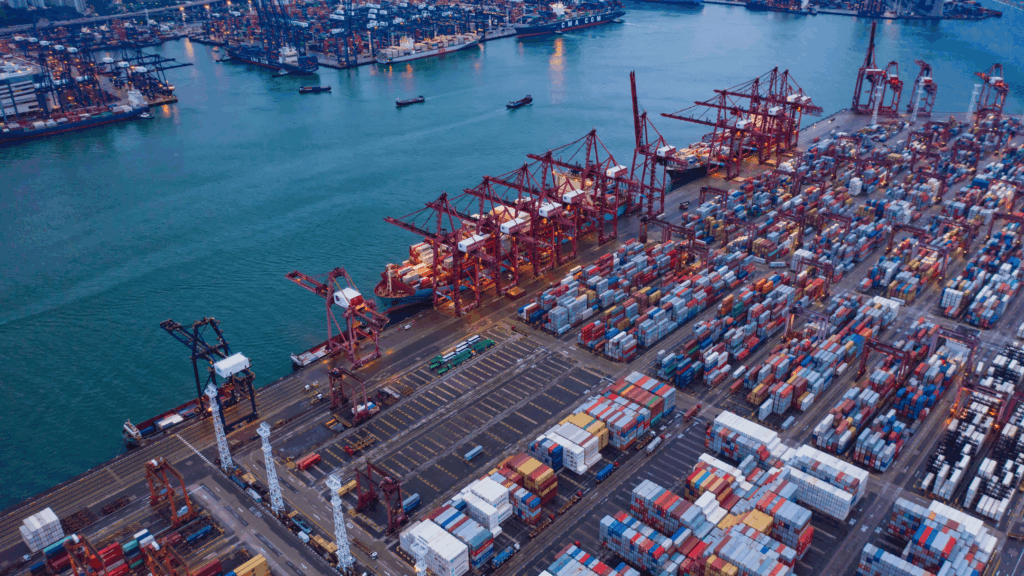
Sourcing from China can transform your Nigerian business overnight—if you know how to do it right.
Right now, thousands of Nigerian merchants are paying almost double what they should for products. They buy from local distributors who import the same items from China, add their markup, and resell at inflated prices. The result? Thin profit margins, limited product selection, and constant struggles to compete with bigger players who source directly.
But here’s the truth: You don’t need to be a big business to source directly from China. Whether you’re running a market stall in Balogun, selling on Instagram, or managing a small shop in Abuja, you can access the same Chinese suppliers that major retailers use—and pay the same wholesale prices they pay.
This comprehensive guide will show you exactly how to source products from China to Nigeria in 2026. You’ll learn how to find reliable suppliers, calculate your true costs, navigate customs, manage shipping, and avoid the costly mistakes that trap most first-time importers. By the end of this guide, you’ll have a clear roadmap to source smarter, save money, and grow your business faster.
Here’s what you’ll discover:
- Why sourcing from China can cut your product costs by 40-60%
- Step-by-step process from finding suppliers to receiving goods in Lagos
- How to avoid scams and work only with verified, trustworthy suppliers
- Exact formulas to calculate your total landed costs (no surprises)
- Payment methods that protect your money
- How to clear Nigerian customs without delays
- Common mistakes that cost merchants thousands—and how to avoid them
Let’s get started.
Why Source from China?
The Numbers Don’t Lie
The most obvious reason to source from China is simple: cost savings. When you buy products directly from Chinese manufacturers instead of through Nigerian distributors, you typically save 40% to 60% on your product costs.
Here’s a real example: A power bank that costs you ₦8,000 from a Lagos distributor can be sourced from China for approximately ₦3,200 (including shipping and import duties). That’s a ₦4,800 savings per unit. If you’re buying 100 units, that’s ₦480,000 in extra profit that goes straight to your pocket instead of to a middleman.
Unlimited Product Variety
China is the world’s manufacturing hub, producing everything from electronics to fashion, beauty products to home goods, toys to industrial equipment. When you source directly, you gain access to millions of products across thousands of categories.
Local distributors only stock what they think will sell quickly. But when you source directly, you can:
- Test new product ideas without huge minimum orders
- Find niche products your competitors don’t have
- Offer your customers more variety and choice
- Stay ahead of trends by launching products faster
Quality Options for Every Budget
There’s a common misconception that “Chinese products are low quality.” The reality is more nuanced: China manufactures products at every quality level, from budget items to premium goods used by global luxury brands.
The same factories that produce iPhones, Nike shoes, and luxury handbags also work with small businesses worldwide. Your job is to choose the quality level that matches your market and price point. Whether you need:
- Budget-friendly products for price-conscious customers
- Mid-range items that balance cost and quality
- Premium products that command higher prices
China has suppliers for all three categories.
Customization Opportunities
Unlike buying from local distributors where you get what’s available, sourcing directly from China opens up customization possibilities:
- Add your own branding and logo
- Customize packaging and product design
- Choose specific colors, materials, or features
- Create private-label products unique to your business
This level of customization helps you build a brand instead of just being another reseller.
Real Success Story: How Chioma Doubled Her Profit
Chioma runs an online beauty store in Port Harcourt. For two years, she bought hair extensions and beauty products from distributors in Lagos, paying premium prices that left her with thin margins.
When she switched to sourcing directly from China:
- Product costs dropped by 55% (from ₦8,000 to ₦3,600 per unit average)
- Profit margins increased from 25% to 60%
- Product variety expanded from 15 SKUs to 40 SKUs
- Monthly revenue grew from ₦400,000 to ₦950,000 in just 4 months
“I wish I had started sourcing from China earlier,” Chioma says. “The savings are incredible, and my customers love the new products I can now afford to stock.”
Understanding the Sourcing Process
Before you place your first order, it’s important to understand the complete journey your products will take from a factory in China to your hands in Nigeria.
The Complete Sourcing Journey: China to Nigeria
Here’s the step-by-step process:
Step 1: Product Research & Supplier Identification
You identify the products you want to source and find potential suppliers on platforms like Alibaba or through sourcing agents.
Step 2: Supplier Vetting & Communication
You contact suppliers, request quotes, ask questions, and verify their legitimacy before committing.
Step 3: Negotiation & Order Confirmation
You negotiate pricing, minimum order quantities, and payment terms, then confirm your order.
Step 4: Payment
You pay the agreed deposit (typically 30% upfront, or 50% with services like BrandSquare).
Step 5: Production
The supplier manufactures or sources your products. This typically takes 7-15 days depending on the product.
Step 6: Quality Inspection (Optional but Recommended)
Before shipping, products are inspected to ensure they meet your specifications.
Step 7: Shipping to Nigeria
Products are shipped via sea freight (25-35 days) or air freight (5-7 days) to Lagos port or airport.
Step 8: Customs Clearance
Your goods clear Nigerian customs. Duties and taxes are paid, and necessary documentation is processed.
Step 9: Final Delivery
Goods are delivered to a warehouse in Lagos where you can collect them, or they’re delivered directly to your location.
Step 10: Final Payment & Collection
You pay any remaining balance and collect your goods.
Timeline Expectations
Sea Freight (Standard Option):
- Production: 7-15 days
- Shipping: 25-35 days
- Customs clearance: 3-7 days
- Total: 35-57 days from order to delivery
Air Freight (Express Option):
- Production: 7-15 days
- Shipping: 5-7 days
- Customs clearance: 2-5 days
- Total: 14-27 days from order to delivery
Plan your inventory accordingly. If you’re restocking for a busy season, order well in advance.
Key Players in the Process
1. Supplier/Manufacturer (China)
The factory or trading company that produces or sources your products.
2. Freight Forwarder
Handles shipping logistics from China to Nigeria. They book cargo space, handle export documentation, and coordinate with shipping lines.
3. Customs Broker/Clearing Agent (Nigeria)
Manages customs clearance in Nigeria, pays duties on your behalf, and ensures compliance with import regulations.
4. Logistics Provider (Optional)
Delivers goods from the port to your warehouse or location.
5. Sourcing Agent/Platform (Like BrandSquare)
Acts as your representative in China, vetting suppliers, negotiating prices, inspecting goods, and coordinating the entire process.
Common Misconceptions Debunked
Misconception 1: “I need huge capital to import from China”
Reality: Minimum order quantities vary widely. You can start with orders as small as ₦100,000-₦200,000 for many products. Plus, payment models like BrandSquare’s 50% upfront system mean you don’t need full capital tied up.
Misconception 2: “All Chinese suppliers are scammers”
Reality: While scams exist, millions of legitimate transactions happen daily. Using verified platforms, checking supplier credentials, and working with sourcing agents dramatically reduces risk.
Misconception 3: “Shipping and customs are too complicated”
Reality: Freight forwarders and customs brokers handle the complex parts. With the right partners, you simply provide documents and pay fees—they do the heavy lifting.
Misconception 4: “I’ll get stuck with bad quality products”
Reality: Pre-shipment inspections, supplier vetting, and clear communication about standards prevent most quality issues. Always inspect samples before bulk orders.
How to Find Reliable Suppliers
Finding the right supplier is the most critical step in your sourcing journey. A good supplier delivers quality products on time at fair prices. A bad supplier can cost you money, time, and customers.
Top Sourcing Platforms
1. Alibaba.com (Best for B2B, Medium to Large Orders)
- Largest B2B marketplace with millions of suppliers
- Trade Assurance offers payment protection
- Verified supplier badges help identify legitimate sellers
- Minimum orders typically higher (50-1000 units)
2. 1688.com (Best for Lowest Prices, Chinese Language)
- Alibaba’s domestic China platform
- Significantly lower prices than Alibaba.com
- Requires Mandarin or translation tools
- Lower minimum orders, but suppliers may not speak English
3. AliExpress (Best for Samples and Small Quantities)
- Retail-focused platform (smaller quantities)
- Good for ordering samples before bulk purchase
- Buyer protection included
- Prices higher than wholesale platforms
4. Global Sources (Best for Quality-Focused Buyers)
- More curated supplier list
- In-person verification of suppliers
- Higher-end products and suppliers
- Trade shows and exhibitions
Red Flags: Warning Signs of Problematic Suppliers
🚩 Prices that seem too good to be true
If a supplier’s prices are 30-40% lower than competitors for the same product, be suspicious. They may be using inferior materials or planning to bait-and-switch.
🚩 No reviews or transaction history
Legitimate suppliers have years of transaction history and customer reviews. Brand new suppliers with zero history are high-risk.
🚩 Poor communication or slow responses
If a supplier takes days to respond to simple questions before you’ve paid, imagine how bad communication will be after they have your money.
🚩 Reluctance to provide samples
Legitimate suppliers understand buyers want to verify quality before bulk orders. Refusal to send samples is a major red flag.
🚩 Pressure to pay outside the platform
Scammers often ask buyers to pay via Western Union, MoneyGram, or personal accounts to avoid platform protections.
🚩 No business license or verification
Serious suppliers can provide business registration documents, factory photos, and certifications.
Essential Questions to Ask Suppliers
Before placing an order, ask these questions:
Product-Related:
- What is the exact product specification? (size, material, weight, etc.)
- What is your Minimum Order Quantity (MOQ)?
- Can you provide product samples? What’s the cost?
- What is the production lead time?
- Do you offer customization (logo, packaging, colors)?
Pricing & Payment: 6. What is your best price for [X] quantity? 7. What are your payment terms? (30% deposit, 70% before shipping?) 8. Do you accept Trade Assurance or Escrow? 9. Are there price breaks for larger quantities?
Quality & Compliance: 10. Do you have product certifications? (CE, RoHS, etc.) 11. What is your quality control process? 12. Can I arrange a third-party inspection before shipping? 13. What is your policy on defective products?
Shipping & Logistics: 14. What is your preferred shipping method? 15. Can you provide FOB, CIF, or DDP pricing? 16. What is the estimated shipping time to Lagos, Nigeria? 17. How do you package products for shipping?
How to Verify Supplier Legitimacy
Step 1: Check Platform Verification Badges
On Alibaba, look for: Gold Supplier, Trade Assurance, Assessed Supplier, and Onsite Check badges.
Step 2: Review Transaction History
Check how long they’ve been on the platform, number of transactions, and customer reviews.
Step 3: Request Business Documents
Ask for: Business license, export license, factory photos, and relevant product certifications.
Step 4: Video Call the Supplier
Schedule a video call to see the factory/warehouse and meet the team. Scammers rarely agree to video verification.
Step 5: Order Samples First
Never place a bulk order without testing product samples. Samples cost $20-$100 but can save you thousands.
Step 6: Use Third-Party Verification Services
Companies like SGS, Bureau Veritas, and TÜV SÜD offer supplier audit services ($200-$500) for high-value orders.
BrandSquare’s Supplier Vetting Process
At BrandSquare, we take supplier verification seriously because your success depends on product quality and reliability.
Our 6-Step Vetting Process:
- Background Check – We verify business registration, years in operation, and export history.
- Factory Visit – Our China-based team physically visits suppliers to confirm they’re legitimate operations, not scammers working from an apartment.
- Product Quality Assessment – We test product samples to ensure they meet acceptable quality standards.
- Communication Test – We evaluate their responsiveness, English proficiency, and willingness to meet buyer requirements.
- Price Comparison – We compare their pricing against 3-5 competitors to ensure you’re getting fair market rates.
- Reference Check – We contact previous buyers to verify the supplier’s track record on quality, delivery, and dispute resolution.
Only suppliers who pass all six checks are added to our verified network.
Calculating Total Landed Cost
One of the biggest mistakes new importers make is focusing only on the product price and forgetting all the other costs involved. To price your products correctly and ensure profitability, you need to understand your total landed cost.
What is Landed Cost?
Landed cost is the total cost of a product once it arrives at your warehouse and is ready for sale. It includes not just the product price, but also shipping, duties, taxes, and all associated fees.
Formula:
Landed Cost = Product Cost + Shipping + Customs Duty + VAT + Port Charges + Clearing Fees
Understanding this number is crucial because it tells you your true cost per unit—and therefore what price you need to charge to make a profit.
Components Breakdown
1. Product Cost (FOB Price)
This is what you pay the supplier for the products themselves. FOB (Free On Board) means the supplier delivers the goods to the port in China, and you handle shipping from there.
2. Shipping Cost
The cost to transport your goods from China to Nigeria.
- Sea Freight: ₦80,000-₦200,000 per cubic meter (CBM) depending on volume
- Air Freight: ₦1,200-₦2,500 per kilogram
3. Customs Duty (7.5% for most products)
Nigeria charges a duty on imported goods, calculated as a percentage of the product’s declared value. Most consumer goods are subject to a 7.5% duty rate.
Formula: Customs Duty = (Product Cost + Shipping Cost) × 7.5%
4. VAT – Value Added Tax (7.5%)
VAT is charged on the total value of the goods including duty.
Formula: VAT = (Product Cost + Shipping + Customs Duty) × 7.5%
5. Port Charges
Fees charged by the Nigerian port authority for handling your shipment. This varies based on container size and cargo type but typically ranges from ₦30,000-₦80,000.
6. Clearing Agent Fees
Your customs broker charges for their services to clear your goods. Expect ₦40,000-₦100,000 depending on complexity.
Real Example: Calculating Landed Cost
Let’s calculate the landed cost for an order of 100 wireless earbuds from China:
Product Cost:
- 100 units × $2.50/unit = $250 USD
- Exchange rate: $1 = ₦1,500
- Product cost in Naira: ₦375,000
Shipping Cost (Sea Freight):
- 0.5 CBM shipment = ₦100,000
Subtotal (Product + Shipping): ₦475,000
Customs Duty (7.5%):
- ₦475,000 × 7.5% = ₦35,625
VAT (7.5% on Product + Shipping + Duty):
- (₦475,000 + ₦35,625) × 7.5% = ₦38,297
Port Charges: ₦50,000
Clearing Agent Fee: ₦60,000
Total Landed Cost: ₦658,922
Cost Per Unit: ₦658,922 ÷ 100 = ₦6,589
So even though each earbud costs $2.50 (₦3,750), your true cost is ₦6,589 per unit when you include all fees.
If you were buying the same earbuds from a Lagos distributor at ₦12,000 each, you’re saving ₦5,411 per unit by importing directly—that’s a 45% savings.
How BrandSquare Simplifies This
At BrandSquare, we provide transparent cost breakdowns before you commit to any order. When you request a quote, we give you:
✅ Exact product cost from supplier
✅ Shipping cost (sea or air)
✅ Estimated customs duty and VAT
✅ All port and clearing fees
✅ Our service fee
✅ Total landed cost in Naira
No guessing. No surprises. You know exactly what you’ll pay before you commit.
Plus, with our 50% upfront payment model, you only pay half the total upfront and the balance when goods arrive—freeing up your cash flow.
Understanding Shipping Options
Choosing the right shipping method can save you thousands of naira and weeks of waiting. Let’s break down your options.
Sea Freight vs Air Freight: Complete Comparison
| Factor | Sea Freight | Air Freight |
|---|---|---|
| Delivery Time | 25-35 days | 5-7 days |
| Cost | Low (Best value) | High (2-5x more expensive) |
| Best For | Large/heavy orders | Small/urgent orders |
| Weight Limit | No practical limit | Cost prohibitive above 100kg |
| Reliability | Delays possible (weather, port congestion) | More reliable schedules |
| Environmental Impact | Lower carbon footprint | Higher carbon footprint |
| Minimum Cost | Around ₦80,000 | Around ₦150,000 |
When to Choose Sea Freight:
- Orders over 100kg or 1 cubic meter
- Non-urgent restocking
- Budget-conscious merchants
- Bulk orders (500+ units)
When to Choose Air Freight:
- Urgent orders (trending products, sold-out items)
- Small, lightweight shipments (<50kg)
- High-value, low-weight products
- Testing new products (small quantities)
Shipping Terms Explained
Understanding shipping terms helps you negotiate better with suppliers and avoid surprises.
FOB (Free On Board)
Supplier delivers goods to the ship at the Chinese port. You pay for shipping, insurance, and all costs from there. Most common for importers.
CIF (Cost, Insurance, Freight)
Supplier pays for shipping and insurance to your destination port (Lagos). You handle customs clearance and inland delivery.
EXW (Ex Works)
You handle everything from the supplier’s warehouse door. Cheapest price from supplier, but you pay for all logistics.
DDP (Delivered Duty Paid)
Supplier handles everything including shipping, customs, and delivery to your door. Highest price but zero logistics hassle.
Recommendation: FOB or CIF are best for most Nigerian importers. You get competitive shipping rates while the supplier handles export from China.
Consolidation: Save Money by Combining Shipments
If you’re ordering from multiple suppliers, consolidation can save you significant money.
How it works:
- Multiple suppliers send products to a consolidation warehouse in China
- All products are combined into one shipment
- You pay one shipping fee instead of multiple fees
Example:
- Supplier A (Guangzhou): 30kg of phone cases
- Supplier B (Shenzhen): 20kg of power banks
- Supplier C (Yiwu): 25kg of earbuds
Without consolidation:
3 separate air shipments = ₦180,000 shipping cost
With consolidation:
1 combined 75kg shipment = ₦110,000 shipping cost
Savings: ₦70,000
BrandSquare offers consolidation services at our China warehouse, allowing you to order from multiple suppliers and ship everything together.
Insurance: Should You Get It?
Short answer: Yes, especially for high-value shipments.
Shipping insurance typically costs 1-3% of your cargo value and covers loss, damage, or theft during transit.
Example:
- Cargo value: ₦500,000
- Insurance cost: ₦5,000-₦15,000 (1-3%)
If your shipment is lost or damaged, insurance pays out the full value. Without insurance, you lose everything.
When insurance is essential:
- High-value shipments (₦300,000+)
- Fragile products
- Electronics
- Peak shipping seasons (higher risk of delays/loss)
Navigating Nigerian Customs
Customs clearance is often the most intimidating part of importing for first-timers. But with the right preparation, it’s straightforward.
Required Documents for Customs Clearance
To clear your goods through Nigerian customs, you’ll need:
1. Commercial Invoice
Issued by your supplier, showing product description, quantity, unit price, and total value.
2. Packing List
Details of how goods are packed (number of cartons, weight, dimensions).
3. Bill of Lading (for sea freight) or Airway Bill (for air freight)
Proof of shipment and ownership of goods.
4. PAAR (Pre-Arrival Assessment Report)
Required for risk assessment and duty calculation. Your clearing agent obtains this.
5. Form M (if applicable)
Foreign exchange allocation document for certain imports.
6. SON/NAFDAC Certificates (if applicable)
Certain products (electronics, food, cosmetics, pharmaceuticals) require certification from regulatory bodies.
7. Import Duty Payment Receipt
Proof that you’ve paid customs duties and taxes.
Your clearing agent handles most of this paperwork on your behalf.
Restricted and Prohibited Items
Nigeria restricts or bans certain imports. Do not attempt to import:
Completely Prohibited:
- Firearms and ammunition
- Counterfeit currency
- Pornographic materials
- Narcotic drugs
- Used/second-hand clothing (with some exceptions)
Restricted (Require Special Permits):
- Pharmaceuticals and medicines (need NAFDAC approval)
- Cosmetics and food products (need NAFDAC registration)
- Telecommunications equipment (need NCC approval)
- Motor vehicles (subject to age restrictions)
Always confirm your product category is allowed before ordering.
How Customs Duty is Calculated
Formula:
Customs Duty = (CIF Value) × Duty Rate
CIF Value = Cost of goods + Insurance + Freight (shipping)
Duty Rate varies by product:
- Most consumer goods: 7.5%
- Electronics: 7.5%
- Textiles: 20-35%
- Automobiles: 35-70%
Example:
- Product cost: $300 (₦450,000)
- Shipping: ₦100,000
- CIF Value: ₦550,000
- Duty (7.5%): ₦41,250
- VAT (7.5% on CIF + Duty): ₦44,344
- Total Taxes: ₦85,594
Common Customs Delays and How to Avoid Them
Delay 1: Incomplete Documentation
Solution: Ensure all documents are complete and accurate before shipment arrival. Work with experienced clearing agents.
Delay 2: SON/NAFDAC Requirements
Solution: Check if your product category requires certification BEFORE ordering. Apply for necessary approvals in advance.
Delay 3: Incorrect Product Classification
Solution: Use the correct HS code (Harmonized System code) for your product. Misclassification can cause delays and penalties.
Delay 4: Port Congestion
Solution: Plan for buffer time. During peak seasons (October-December), allow extra days for clearance.
Delay 5: Random Physical Inspection
Solution: Nothing you can do to avoid this, but proper documentation speeds up the process. Usually adds 1-3 days.
Working with a Customs Broker
What they do:
- Prepare and submit all customs documentation
- Calculate and pay duties on your behalf
- Coordinate with port authorities
- Handle inspections and queries
- Arrange delivery from port to warehouse
What they charge: ₦40,000-₦150,000 depending on shipment complexity and value.
How to choose a good broker:
- Ask for referrals from other importers
- Check their experience with your product category
- Confirm they have valid CAC registration
- Request a detailed fee breakdown upfront
- Ensure they provide tracking updates
At BrandSquare, we work with vetted clearing agents who handle the entire customs process for you—no stress, no surprises.
Payment Methods & Security
Paying for international orders safely is critical. Use the wrong payment method, and you could lose your entire investment to a scam.
Safe Payment Options
1. Trade Assurance (Alibaba)
How it works: Your payment is held by Alibaba until you confirm receipt of goods that meet your order requirements.
Protection: If goods don’t arrive or don’t match specs, Alibaba refunds you.
Fees: Free for buyers (suppliers pay a small fee)
Best for: Orders from Alibaba suppliers with Trade Assurance badges.
2. Escrow Services
How it works: A third party holds your payment until both parties fulfill their obligations.
Protection: Money is only released when you confirm goods are satisfactory.
Fees: 1-5% of transaction value
Best for: Large orders or new supplier relationships.
3. T/T (Telegraphic Transfer / Bank Wire)
How it works: You send money directly to the supplier’s bank account.
Protection: None. Once sent, money is gone.
Fees: ₦3,000-₦10,000 per transfer
Best for: Established suppliers you’ve worked with multiple times.
⚠️ Warning: Only use T/T with verified suppliers you trust completely.
4. PayPal / Credit Card
How it works: Payment through PayPal or card with buyer protection.
Protection: Can dispute charges if goods don’t arrive or don’t match description.
Fees: 3-5% transaction fees
Best for: Small orders or samples (many suppliers don’t accept PayPal for large orders).
Payment Terms to Negotiate
Standard terms:
30% deposit upfront, 70% balance before shipping.
Better terms for you:
50% upfront, 50% after inspection but before shipping.
Risky terms to avoid:
100% upfront payment (unless using Trade Assurance or working with a trusted supplier).
BrandSquare’s 50% Model:
With BrandSquare, you pay:
- 50% when you confirm your order
- 50% when goods arrive at our Lagos warehouse and are ready for pickup
This protects you because you only pay the full amount after goods have cleared customs and are physically in Nigeria.
How to Avoid Payment Scams
🚨 Never pay suppliers via:
- Western Union or MoneyGram
- Personal PayPal or Venmo accounts
- Cryptocurrency (unless you fully trust the supplier)
- Any method that bypasses platform protections
🚨 Red flags:
- Supplier asks you to pay a different company name than their business registration
- They insist on full payment before production starts
- They refuse to accept Trade Assurance or Escrow
- They offer “discounts” for paying outside the platform
🚨 Protect yourself:
- Always use platform payment protection when available
- Start with small orders or samples
- Verify supplier thoroughly before large payments
- Keep all communication and invoices documented
- Use a sourcing agent like BrandSquare for added security
Quality Control & Inspection
Receiving defective products after paying and waiting weeks for delivery is a nightmare. Quality inspection prevents this.
Why Inspection Matters
Without inspection:
- You only discover problems after goods arrive in Nigeria
- Returning goods to China is expensive (often ₦200,000+)
- Disputes are harder to win without documentation
- You’re stuck with unusable inventory
With pre-shipment inspection:
- Problems are caught before shipping
- Supplier must fix issues or face non-payment
- You have documented proof if disputes arise
- Defect rates drop to near zero
Cost of inspection: ₦30,000-₦80,000
Cost of receiving bad goods: ₦500,000+ (full order value)
The inspection fee is worth it.
Pre-Shipment Inspection Checklist
A good inspection covers:
✅ Quantity verification – Confirm correct number of units
✅ Product specifications – Verify size, color, material, weight match your order
✅ Functionality testing – Test that products work as intended (especially electronics)
✅ Quality standards – Check for defects, scratches, damage
✅ Packaging quality – Ensure products are packed securely for shipping
✅ Labeling accuracy – Verify labels, barcodes, and branding are correct
✅ Compliance – Confirm products meet any required safety or regulatory standards
How to Handle Defective Products
If defects are found during inspection:
Option 1: Request Replacement
Supplier provides replacement units for defective items before shipping.
Option 2: Negotiate Discount
If defects are minor, negotiate a price reduction instead of replacement.
Option 3: Cancel Order
If defects are major and supplier can’t fix them, cancel the order and request a refund.
If defects are found after arrival:
Document everything with photos/videos. Contact supplier immediately. File a dispute through the platform if they refuse to compensate. This is why using Trade Assurance or working with agents like BrandSquare is critical.
Dispute Resolution Process
Step 1: Contact supplier with evidence (photos, videos, inspection reports).
Step 2: Request resolution (refund, replacement, partial refund).
Step 3: If supplier refuses, escalate to platform dispute center (Alibaba) or your sourcing agent.
Step 4: Platform mediates and makes a decision based on evidence.
Step 5: If you win, platform releases a refund from the supplier’s deposit.
Timeframe: 2-4 weeks for resolution.
BrandSquare’s Quality Assurance Process
At BrandSquare, quality inspection is built into every order:
Our QC Process:
- Pre-Production Sample Check – We verify samples match your requirements before bulk production begins.
- During Production Monitoring – For large orders, we check progress midway through production.
- Pre-Shipment Inspection – Our China team inspects 100% of products before they leave the warehouse:
- Count every unit
- Test functionality
- Check for defects
- Verify packaging
- Take detailed photos
- Documentation – You receive a full inspection report with photos before goods ship.
- Resolution – If issues are found, we don’t ship until the supplier fixes them.
Result: You only pay the balance when we confirm your goods meet the agreed standards.
Section 9: Common Mistakes to Avoid
Learn from the mistakes of others. Here are the costliest errors new importers make—and how to avoid them.
Mistake 1: Ordering Without Samples
The mistake: Placing a bulk order of 500 units without testing a sample first.
The consequence: Receiving 500 units of poor-quality products you can’t sell.
The solution: Always order 1-5 samples before any bulk purchase. Samples cost $20-$100 but can save you thousands.
Mistake 2: Not Clarifying MOQ (Minimum Order Quantity)
The mistake: Assuming you can order any quantity, then discovering the supplier requires 1,000 units minimum.
The consequence: Either ordering more than you can sell or wasting time finding a new supplier.
The solution: Ask about MOQ in your first message to the supplier. If it’s too high, ask if they can be flexible or find a different supplier.
Mistake 3: Ignoring Shipping Costs in Profit Calculations
The mistake: Calculating profit based only on product cost, forgetting shipping, duties, and fees.
The consequence: Realizing you’re barely breaking even (or losing money) after all costs are included.
The solution: Always calculate total landed cost before setting your selling price. Use the formula from Section 4.
Mistake 4: Poor Communication with Suppliers
The mistake: Sending vague messages, not confirming details in writing, or assuming the supplier understands your requirements.
The consequence: Receiving products that don’t match your expectations.
The solution:
- Be specific in all communications
- Confirm everything in writing (WhatsApp messages don’t count—use email)
- Send reference photos or samples
- Create a written specification document for your order
- Confirm understanding before payment
Mistake 5: Skipping Quality Inspection
The mistake: Trusting the supplier to ship perfect products without verification.
The consequence: Receiving defective, wrong, or low-quality goods with no recourse.
The solution: Always arrange pre-shipment inspection for orders over ₦200,000. The ₦30,000-₦80,000 cost is insurance against disaster.
Bonus Mistake to Avoid: Paying suppliers outside of secure platforms to save on fees. The “savings” aren’t worth the risk of losing everything.
Conclusion: Your Roadmap to Sourcing Success
Sourcing products from China to Nigeria can feel overwhelming at first—there are suppliers to vet, costs to calculate, shipping to arrange, and customs to clear. But as you’ve learned in this guide, every step is manageable when you know what to do.
Here’s what you now know:
✅ Why sourcing from China saves 40-60% compared to local distributors
✅ The complete journey your products take from China to your hands
✅ How to find and verify reliable suppliers who won’t scam you
✅ How to calculate your true total landed cost (no surprises)
✅ When to use sea freight vs air freight
✅ What documents you need for Nigerian customs
✅ How to pay safely and protect your money
✅ Why quality inspection is non-negotiable
✅ The mistakes that cost new importers thousands—and how to avoid them
The key to success is simple: Start small, learn from each order, and scale gradually.
Don’t try to import a container load on your first attempt. Start with a small order (₦100,000-₦300,000), test the process, learn the ins and outs, and build your confidence. Once you’ve successfully completed 2-3 small orders, you’ll have the knowledge and experience to scale.
Remember:
- Verify suppliers thoroughly before paying
- Always calculate total landed cost, not just product price
- Inspect goods before they ship
- Use secure payment methods
- Work with trusted partners who have your best interests at heart
Ready to Start Sourcing? BrandSquare Makes It Easy.
You don’t have to navigate this complex process alone. BrandSquare handles everything for you—from finding verified suppliers to delivering goods to Lagos.
Here’s what we do:
✅ Find the best suppliers – Our China team vets and negotiates with suppliers on your behalf
✅ Transparent pricing – You get a complete cost breakdown before you pay anything
✅ 50% upfront payment – You only need half your capital to start, pay the rest when goods arrive
✅ Quality inspection – Every order is inspected in China before shipping
✅ Shipping & customs – We handle all logistics, customs clearance, and delivery to Lagos
✅ Risk-free – Your money is protected. You only pay the balance after goods pass inspection
Get Your Free Quote Today
Tell us what products you want to source, and we’ll send you a detailed quote within 24 hours—no commitment required.