

Importing from China can be one of the most profitable moves a small business owner makes — or one of the most expensive mistakes. The difference almost always comes down to one thing: whether you properly verified your supplier before paying.
Every year, Nigerian entrepreneurs lose millions of naira to ghost suppliers, trading companies pretending to be factories, and outright scammers operating behind polished Alibaba storefronts. The scary part? Most of these situations were completely avoidable.
In this guide, you will learn exactly how to verify a Chinese supplier step by step — before a single kobo leaves your account.
Why Supplier Verification Is Non-Negotiable
The Chinese manufacturing ecosystem is enormous. There are genuine, world-class factories producing everything from electronics to fashion accessories. But alongside them exist thousands of middlemen, brokers, and bad actors who have mastered the art of looking legitimate.
When you are importing from thousands of kilometres away, you cannot rely on instinct alone. You need a process — a structured checklist that removes guesswork and protects your capital.
Here is that process.
Step 1 — Start With the Business License
Every legitimate Chinese company is required by law to register with China’s State Administration for Market Regulation (SAMR). This registration produces a Unified Social Credit Code (USCC) — an 18-digit identifier that functions like a business registration number.
What to do:
- Ask your supplier for their business license document (营业执照, pronounced yíngyè zhízhào)
- Cross-check the company name, registration date, registered capital, and legal representative
- You can verify the license on the National Enterprise Credit Information Publicity System at gsxt.gov.cn
If a supplier refuses to share their business license or gives you excuses, that alone is a red flag serious enough to walk away.
Pro Tip: Pay attention to the registered capital. A factory claiming to produce thousands of units per month but registered with a capital of ¥10,000 (less than ₦2 million) is almost certainly a small trading company, not a manufacturer.
Step 2 — Verify Their Factory Exists — Physically

A professional website and a polished Alibaba Gold Supplier badge do not confirm that a factory actually exists. Plenty of trading companies purchase these badges and present themselves as manufacturers.
What to do:
Request a Live Video Call or Factory Tour
Ask for a scheduled video call where the supplier walks you through their production floor. A real factory will accommodate this with minimal fuss. Watch for:
- Machinery appropriate to the product they claim to make
- Workers and production activity in the background
- The company name visible on signage or uniforms
Use Google Maps or Baidu Maps
Take the factory address they provide and drop it into Google Maps or Baidu Maps satellite view. You should see industrial buildings consistent with a manufacturing operation — not a residential address or an empty lot.
Hire a Third-Party Inspection Company
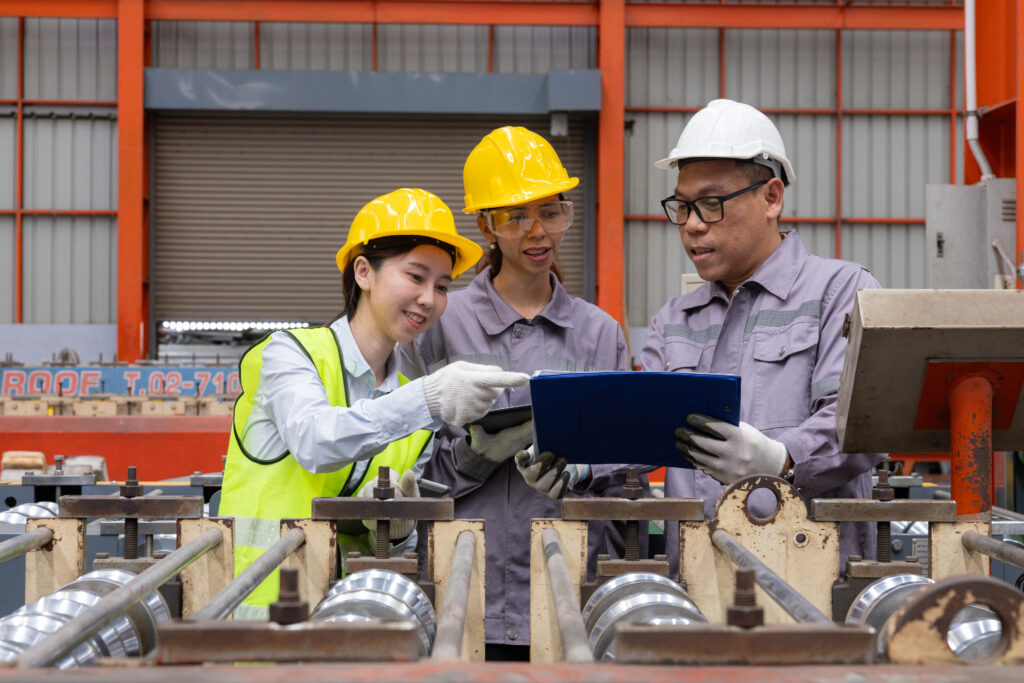
If your order value is significant (anything above $2,000 is worth the cost), consider using a professional inspection service like SGS, Bureau Veritas, or QIMA. These companies send physical auditors to the factory floor to verify existence, capacity, and compliance before your goods are produced or shipped.
Step 3 — Check Their Track Record on the Platform
If you are sourcing through Alibaba, Global Sources, or Made-in-China, the platform itself gives you useful verification signals — if you know where to look.
On Alibaba, check:
- Years on platform — Suppliers with 5+ years and consistent activity are lower risk than those who joined last month
- Verified Supplier badge — This means Alibaba has conducted an on-site audit of the factory
- Transaction history — Look at the number of completed orders and the response rate
- Buyer reviews — Read the negative reviews carefully, not just the positive ones
What to avoid:
- Suppliers with fewer than 10 reviews and very high order counts (reviews can be purchased; this pattern suggests manipulation)
- Suppliers who push you to communicate off-platform via WhatsApp or WeChat before any formal relationship is established
Step 4 — Request a Sample Before Any Bulk Order
No serious importer places a bulk order without first receiving and inspecting a product sample. This is non-negotiable.
Why samples matter:
- They confirm the product matches what was advertised
- They reveal quality issues that photos never show — stitching, weight, finish, smell, durability
- They give you a test of the supplier’s communication speed and professionalism during the process
What to look out for:
- Suppliers who refuse to send samples at all
- Suppliers who send a sample that is clearly different in quality from what arrives in bulk (this is called sample fraud and it is extremely common)
- Unreasonably long lead times just for a sample
Step 5 — Scrutinise Their Communication
How a supplier communicates tells you a great deal about how they will handle problems when they arise — and problems will arise.
Signs of a professional, trustworthy supplier:
- Responds within 24 hours consistently
- Answers specific questions directly without deflecting
- Proactively shares documentation, certifications, and production timelines
- Is willing to discuss payment terms rather than demanding 100% upfront
Signs to be cautious about:
- Vague answers to specific questions (“Don’t worry, quality is good”)
- Pressure to pay quickly or “lock in a price before it changes”
- Grammar and communication style inconsistent with a professional business operation
- Reluctance to provide any documentation
Why You Should Never Pay 100% Upfront to a Chinese Supplier
Step 6 — Verify Bank Account Details Independently
Before making any payment, verify that the bank account details match the company you have been dealing with. Wire fraud — where payment details are intercepted and changed — is a real risk in international trade.
What to do:
- Confirm payment details via a separate communication channel (a phone call, not just email or WhatsApp)
- Ensure the account name matches the company name on the business license
- Be especially careful if payment details change at the last minute — this is a known fraud pattern
Step 7 — Use a Sourcing Agent If You Are Not Sure
If this process feels overwhelming — or if your order is large enough that a mistake would be costly — the smartest move is to work with a verified sourcing agent based in China.
A reliable sourcing agent will conduct all of the above checks on your behalf, negotiate pricing, supervise production, and arrange quality inspection before shipment. This is exactly what BrandSquare does for business owners in Nigeria and across Africa.
Rather than wiring money to a supplier you found online and hoping for the best, BrandSquare handles the entire verification, sourcing, inspection, and shipping process — so you only pay when the right products are ready to ship.
How BrandSquare Sources, Inspects and Ships Your Products Without You Leaving Nigeria
Quick Reference: Supplier Verification Checklist
Before sending any payment to a Chinese supplier, run through this checklist:
- Business license obtained and verified on gsxt.gov.cn
- Factory address confirmed via satellite view or third-party audit
- Live video call or factory tour completed
- Platform history reviewed — years active, reviews, badges
- Sample received, inspected, and approved
- Bank account details verified via a separate channel
- Communication style professional, responsive, and transparent
- Payment terms agreed — not 100% upfront
If you cannot check every item on this list confidently, do not proceed alone.
The Bottom Line
Verifying a Chinese supplier takes time and effort — but it costs far less than recovering from a scam or receiving a container of defective goods. The businesses that consistently profit from China importation are not the ones who got lucky. They are the ones who built a rigorous process and stuck to it every single time.
If you would rather skip the stress and let experts handle verification for you, BrandSquare exists for exactly that reason.
Ready to Import Without the Risk?
BrandSquare connects Nigerian and African business owners with verified Chinese suppliers — handling sourcing, inspection, and shipping so you can focus on selling.
Start Your Sourcing Request on BrandSquare →
gsxt.gov.cn — China’s National Enterprise Credit Information System
QIMA.com — third-party inspection reference
SGS.com — inspection and verification reference